 ISAAC WOOTEN

Twelve years designing Google Cloud, and today I lead the team behind BigQuery’s AI-native tools.
BigQuery is where companies keep their data, and getting answers out of it has always meant hand work: SQL for every question, a pipeline for every new source, time spent hunting for nulls and PII. I lead the design team building agentic BigQuery, so engineers and business users alike can ask their data a question in plain language and let an agent do the heavy lifting around it.
Agentic BigQuery, BigQuery Studio and the Data Agent Kit are live on a top-3 revenue product in Google Cloud. They were built by a team I grew from five to eleven, and the patterns we set have been adopted across the org. Further back, Cloud Logging, which I designed from zero in 2014, is among the most used products in the console today.
Designing agentic BigQuery
Getting an answer out of a warehouse shouldn’t require writing SQL.
BigQuery’s promise is one place for all your data: connect your other sources to the warehouse and everything lives together. The cost has always been the hand work in between. Every question meant a SQL query written by hand; every new source meant a pipeline built by hand; every messy table meant hunting for nulls, PII and inconsistencies yourself.

Agentic BigQuery lets people talk to their data. Ask a question in plain language and get an answer, and let the agent do the heavy lifting around it: migrating data, setting up pipelines, cleaning tables and flagging PII, nulls and inconsistencies before they cause trouble. The goal is that technical and non-technical people alike can get from a question to an insight without writing a line of SQL.
Before
- Write the SQL by hand
- Build each pipeline yourself
- Hunt for nulls, PII and bad rows
- Get an answer, if you know SQL
With the agent
- Ask in plain language
- The agent plans the query or pipeline
- You review what it proposes
- It runs, and flags what looks wrong
You
- Ask the question, in your own words
- Decide what matters and what the answer is for
- Review and approve changes to data and pipelines
The agent
- Turn the question into SQL and run it
- Migrate data and set up pipelines
- Clean tables, and flag PII, nulls and inconsistencies
- Bring other sources into the warehouse
The hard part: one product has to serve the engineer who lives in SQL and the business user who has never written a query. The same question has to come back at the right depth for each of them, with the agent’s work visible to the one who wants to check it and out of the way for the one who just wants the answer.
How I led it
I took the team over at a hard moment. The org was mid-reorg, the team had lost people, and its work was invisible to the leadership deciding the roadmap.
Three things fixed it, and the order mattered.
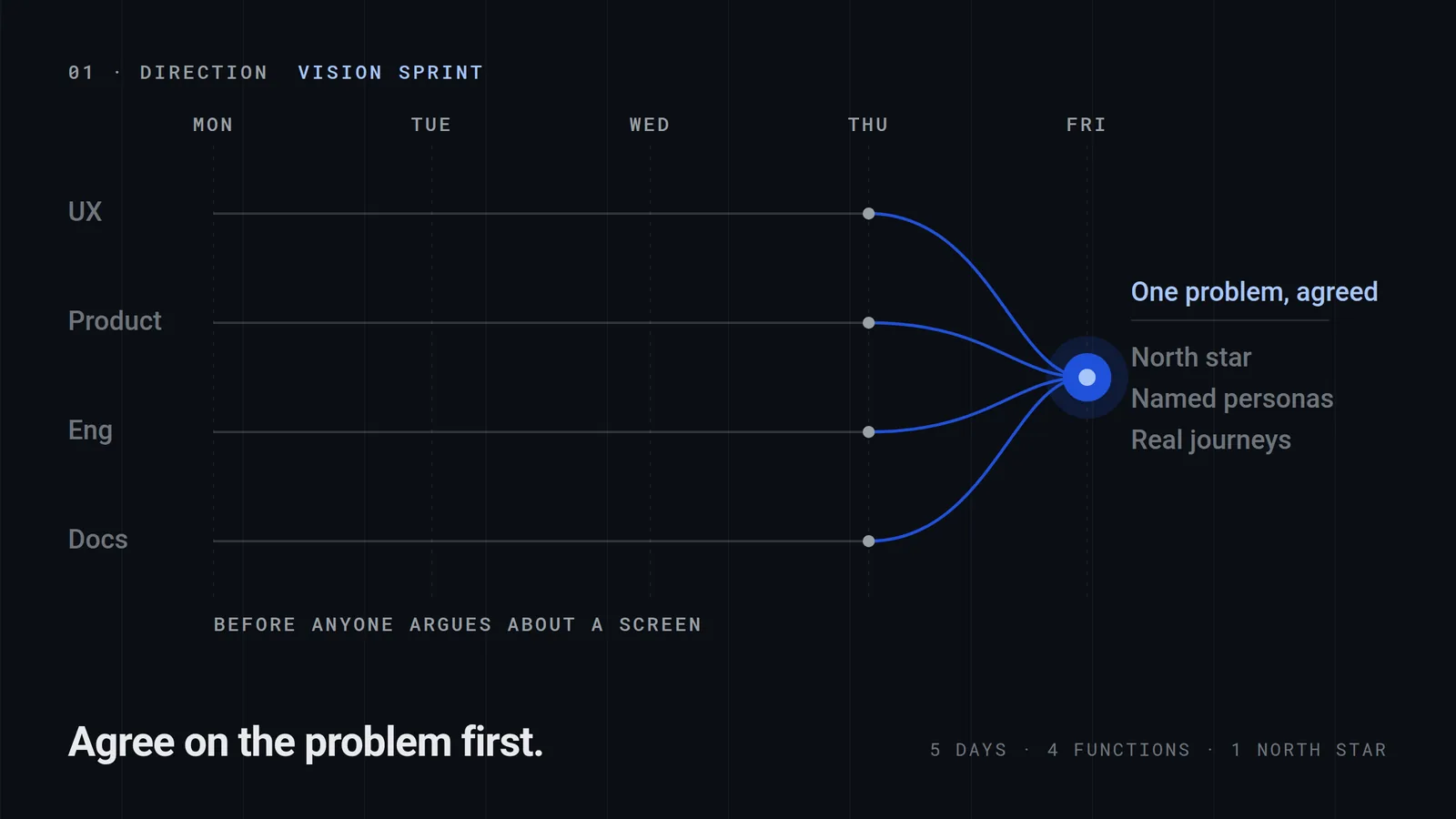
1 · Direction
I ran a week-long vision sprint for a platform-unification effort with one job: a north star, named personas and real customer journeys that UX, product, engineering and docs had all agreed to. Agreement on the problem is the expensive part of design; once you have it, most of what follows is cheap.
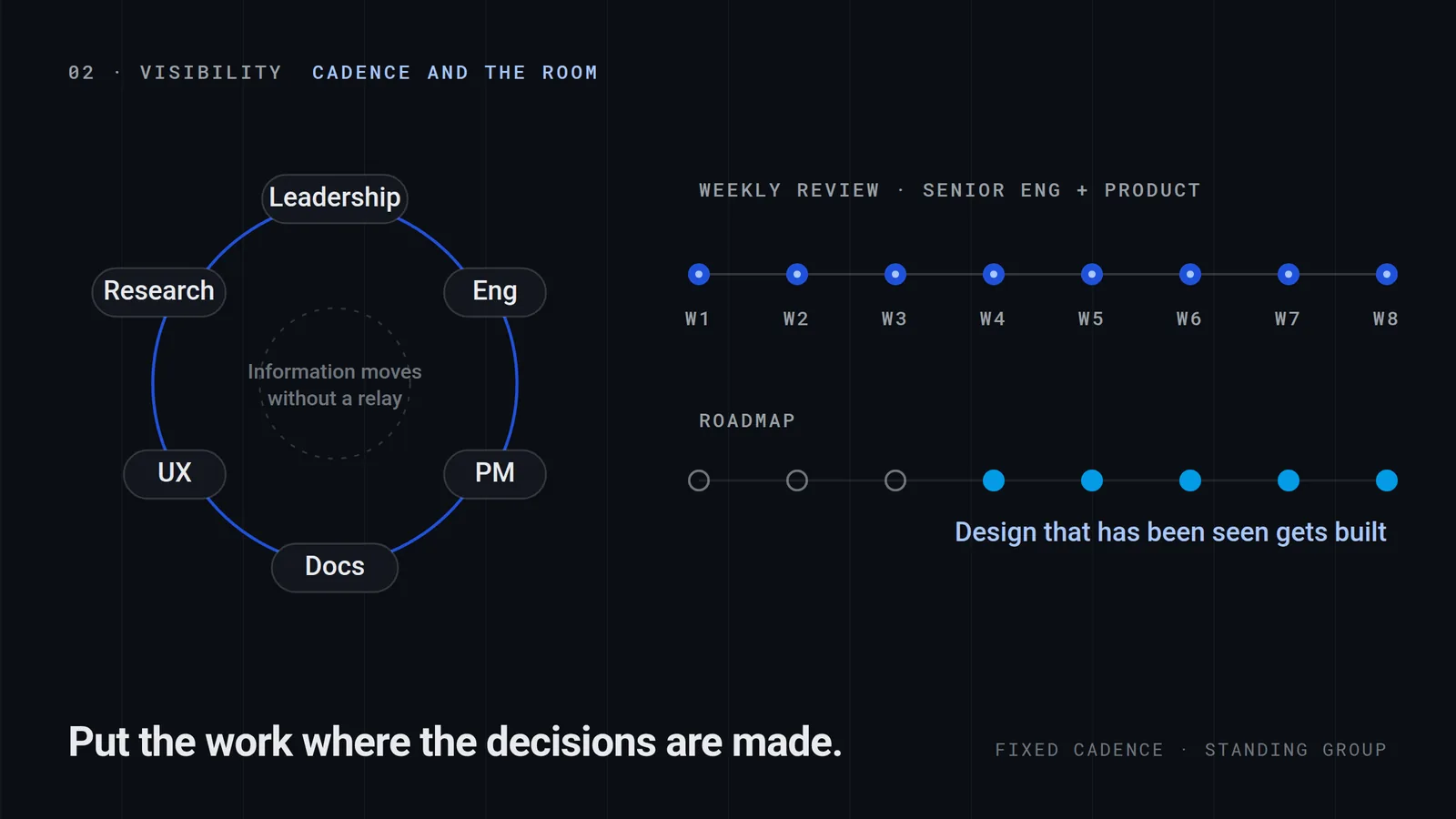
2 · Visibility
I put the team's work in front of senior engineering and product leadership on a fixed weekly cadence, and set up a standing cross-functional group so information could move without me in the room. Design that nobody senior has seen does not get built, however good it is.
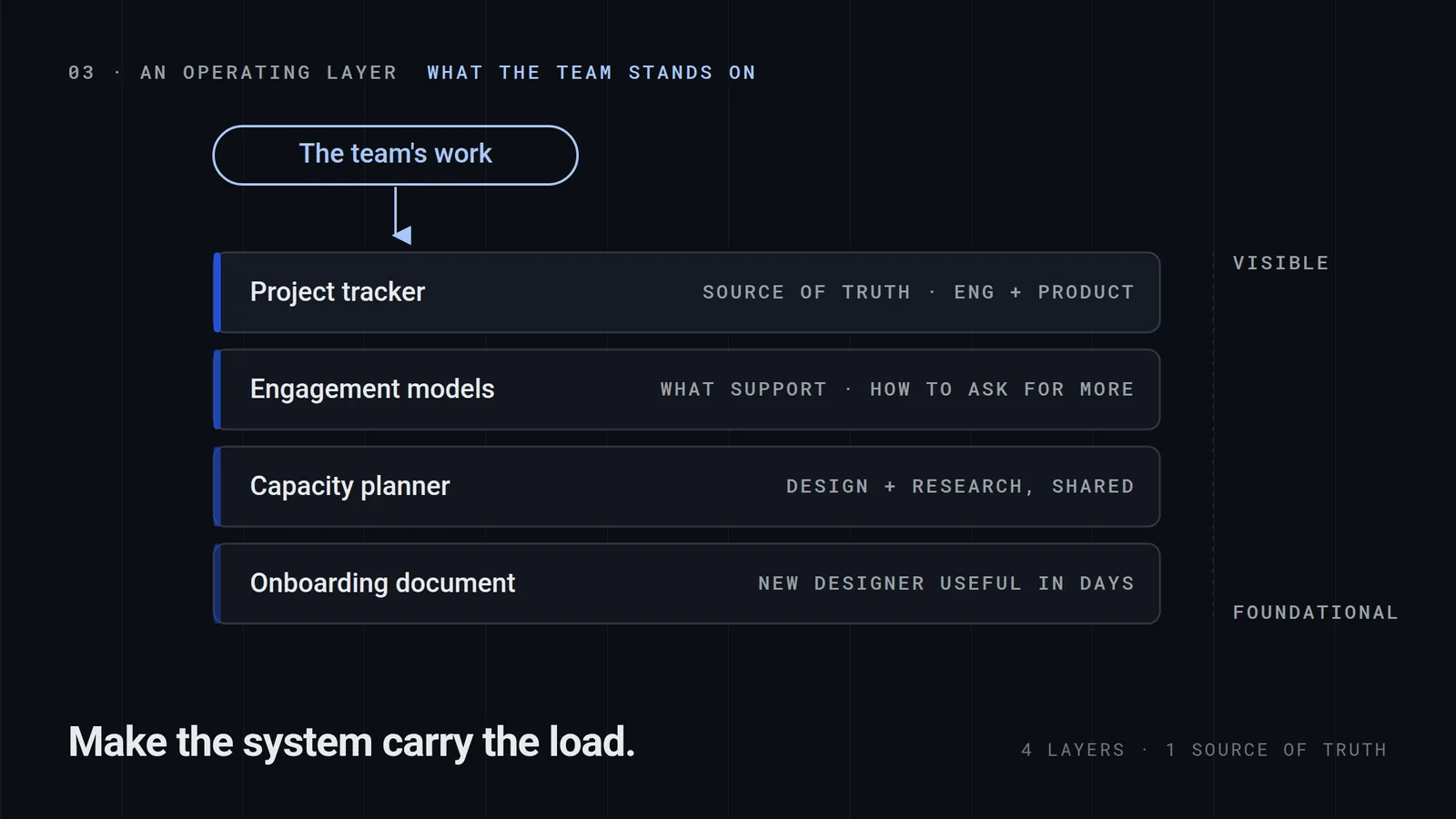
3 · An operating layer
Then the things that make a team run: one project tracker that engineering and product treated as the source of truth, engagement models so every partner team knew what support it had and how to ask for more, a shared capacity planner, and an onboarding document that made a new designer useful within days.
The team grew, its work landed in the roadmap, and I stopped being the bottleneck. A team in trouble usually does not need better taste. It needs a direction it believes in and an audience that can see it.
Beyond my own org, I led a six-month design collaboration across BigQuery, the streaming products and the Cloud Setup team that removed real friction from onboarding and unlocked new roadmap areas and additional funding for a partner team.
Set a high bar and a sharp direction, then give designers the context and cover to do the best work of their careers.
How I lead
From question to answer

Products
Seven of these I designed from zero: Cloud Logging, Cloud Trace, Cloud Profiler, Cloud Debugger and Security Command Center in the Stackdriver years, then Managed Service for Apache Kafka and BigQuery Engine for Apache Flink.
Most of what my team is building now is unreleased: the agentic Data Cloud, and the future of BigQuery Studio, Conversational Analytics, BigQuery Graph, the Data Agent Kit and the Gemini Enterprise integrations. Below is every product I have led or shaped that Google documents publicly, linked to the real thing.
Now · Data Cloud, 2022 to present

BigQuery and BigQuery Studio
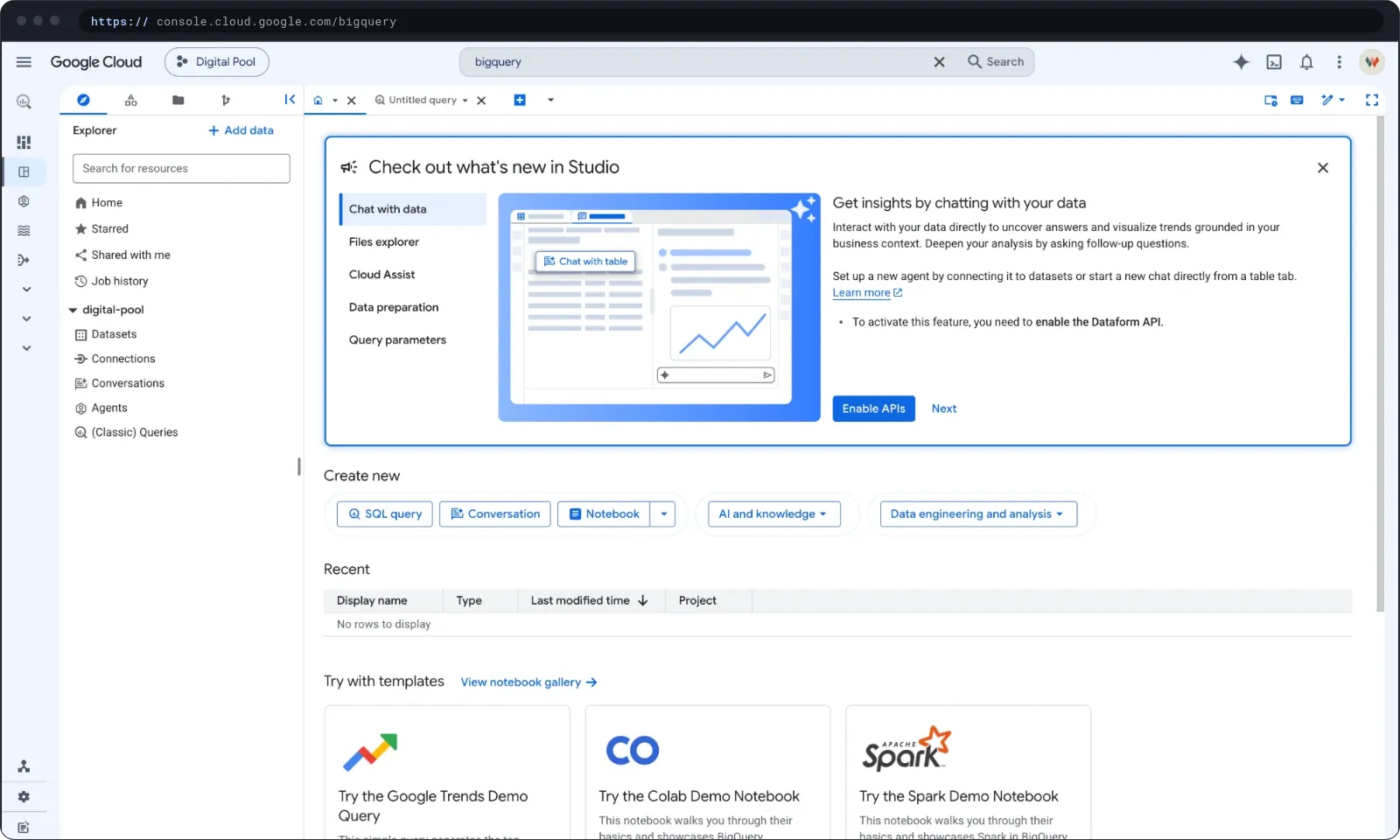

The console surface my team designs: Explorer, SQL, notebooks, data canvas, pipelines and Gemini assistance in one workspace over the same data.

Gemini Enterprise
Google's agentic platform for the workplace, and my team owns the part where it meets the Data Cloud, so answers and actions are grounded in BigQuery.

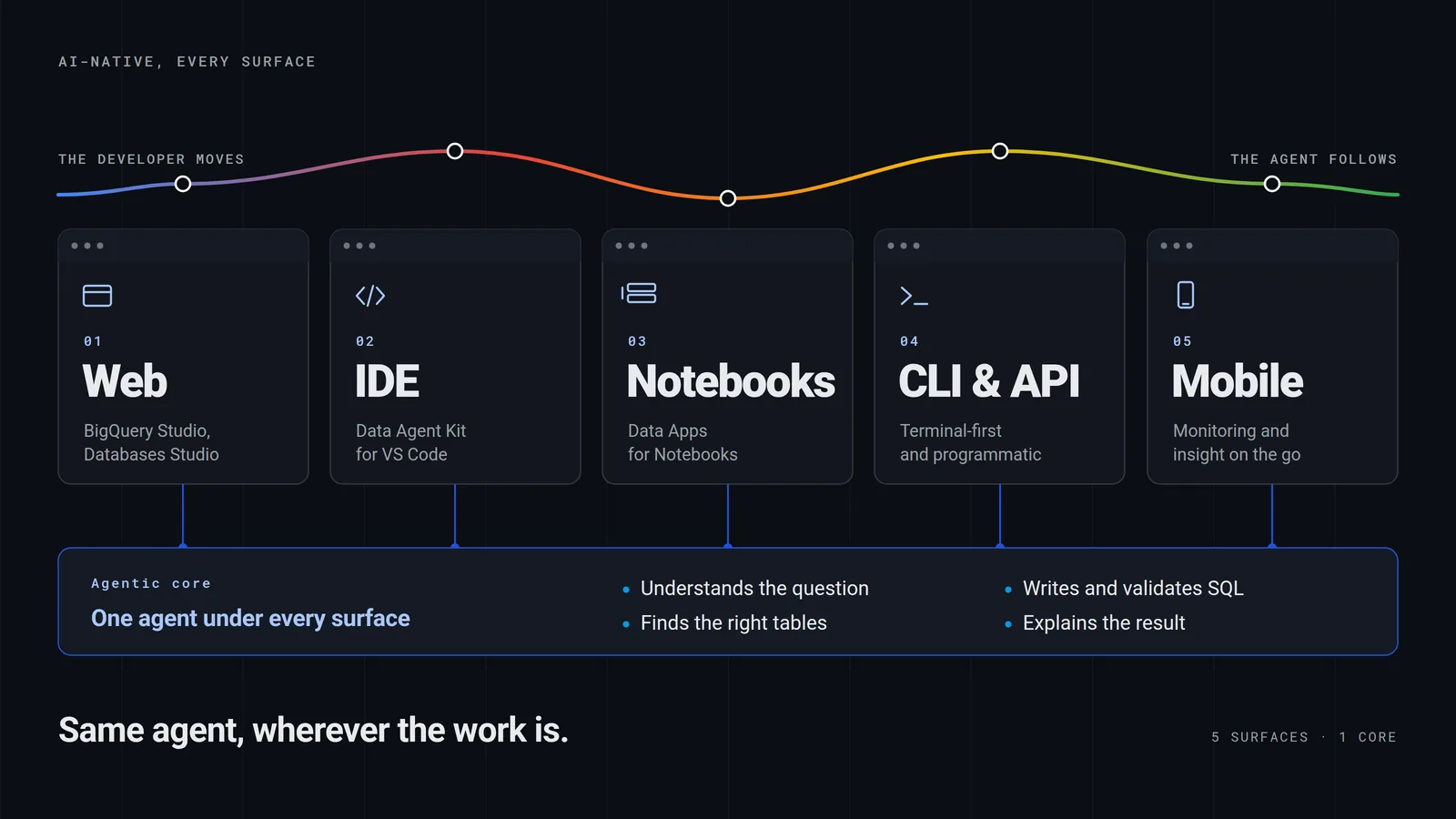
Data Agent Kit for VS Code
Data agents inside the editor: plain-language questions, SQL or Python over BigQuery, and pipelines built and deployed without leaving VS Code.

Data Apps for Notebooks
A notebook analysis becomes a shareable, managed app: pick the cells, publish, and hand the business team something they can use instead of a screenshot.

Managed Service for Apache Kafka, and BigQuery Engine for Apache Flink
The two streaming products I led design on from zero: Kafka end to end from MVP and now generally available, Flink serverless stream processing in preview. Both were built inside a large org with an existing roadmap, which is a different skill from founding something.

Dataflow and Pub/Sub
I designed more than twenty features across the two, fourteen of which reached general availability inside three quarters, plus the Pub/Sub and Managed Kafka integrations into BigQuery.
Then · Cloud Diagnostics and platform, 2014 to 2021

Cloud Logging
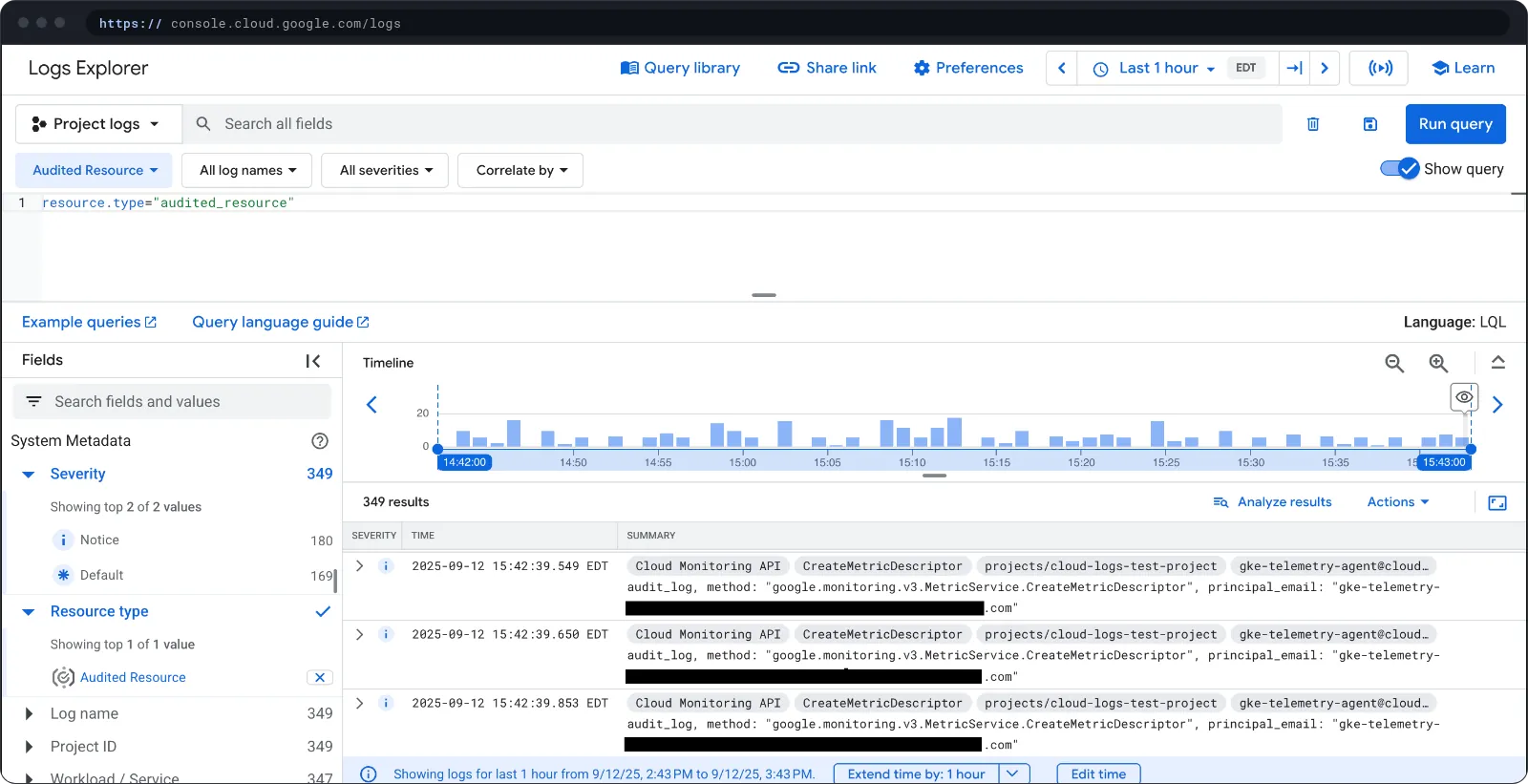
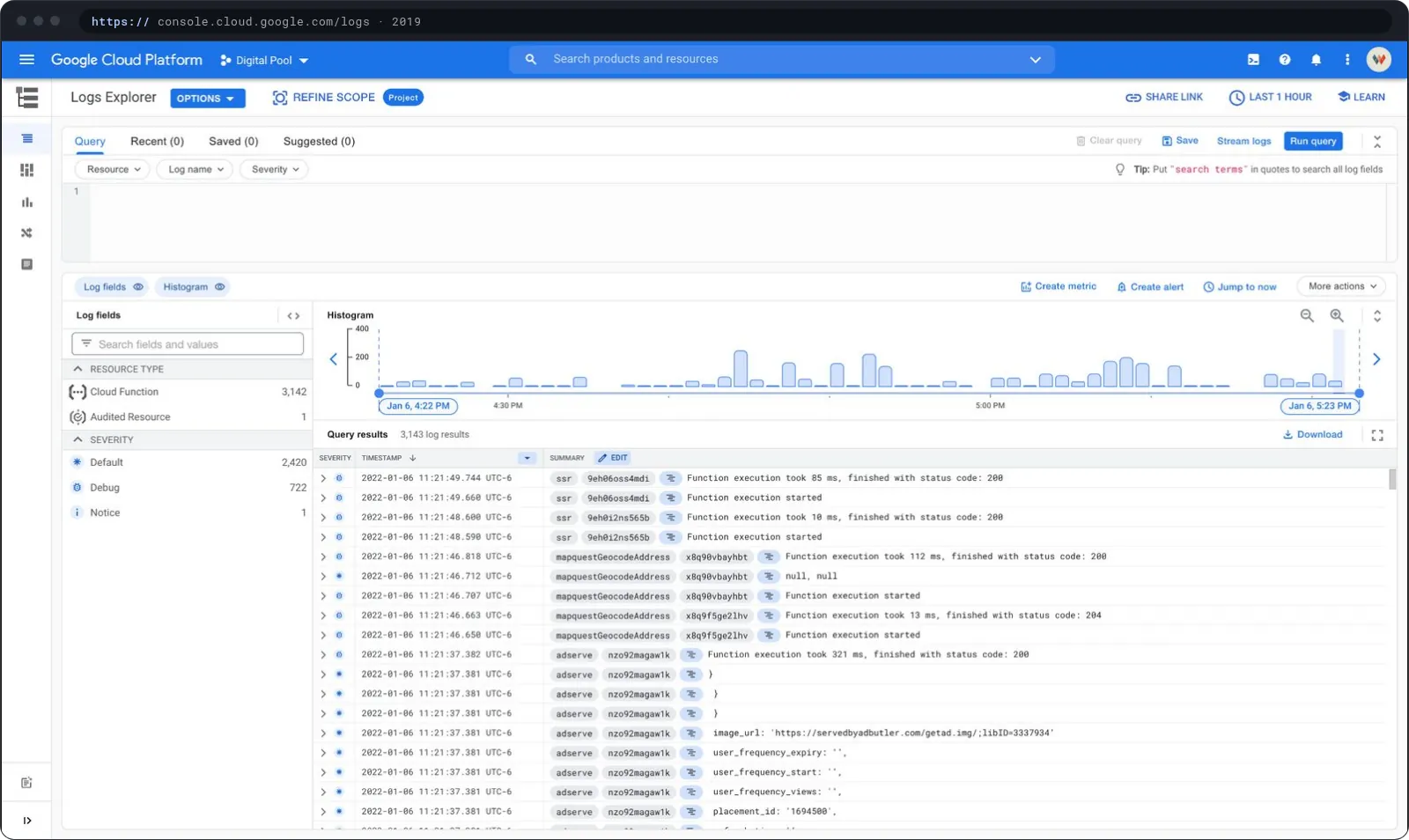
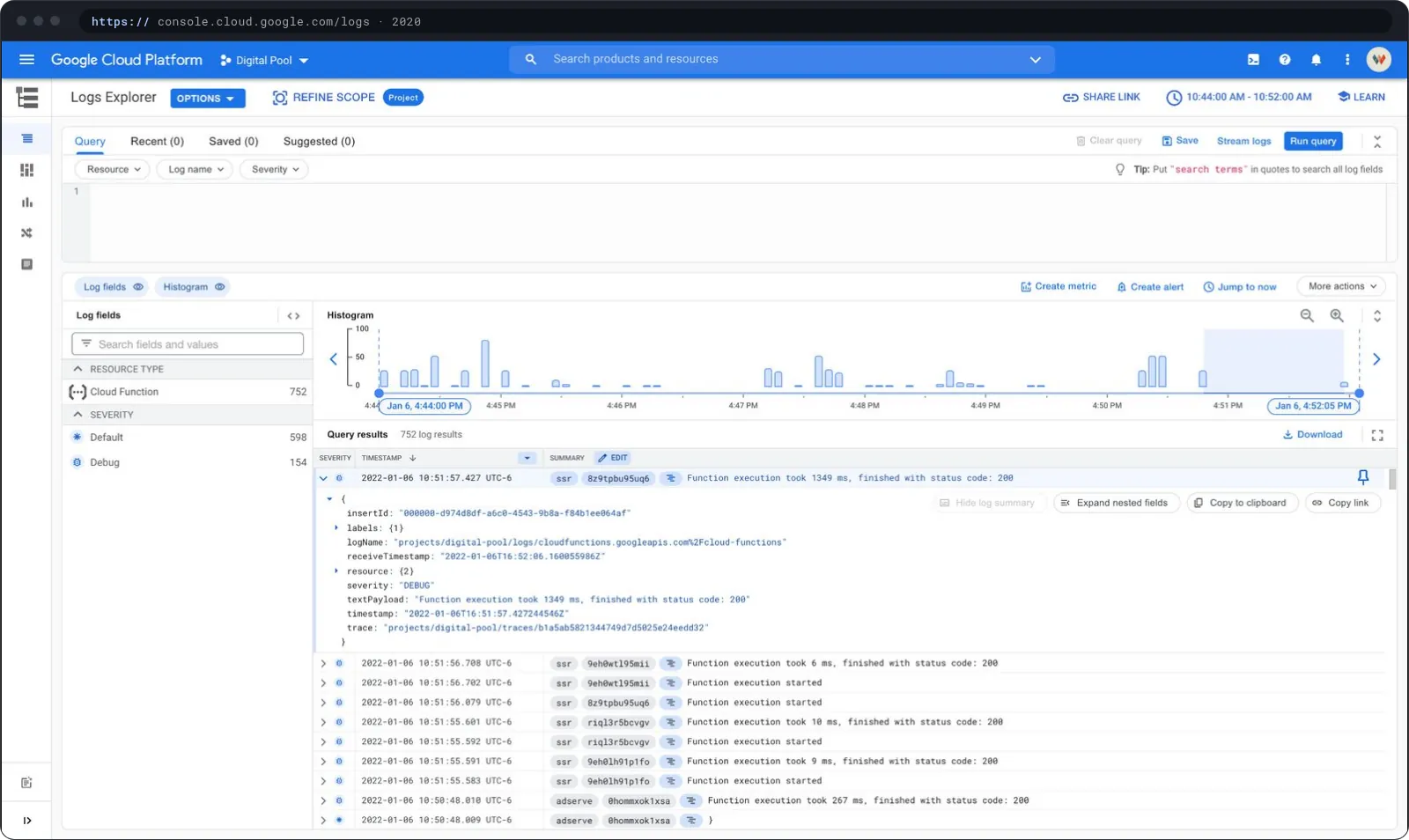
Designed from zero in the Stackdriver years: a query, a histogram of volume over time, and the entries underneath. The 2019 and 2020 shots are as I shipped it; the first is the surface today. It rolled into Cloud Operations and is among the most used products in the console.

Cloud Trace
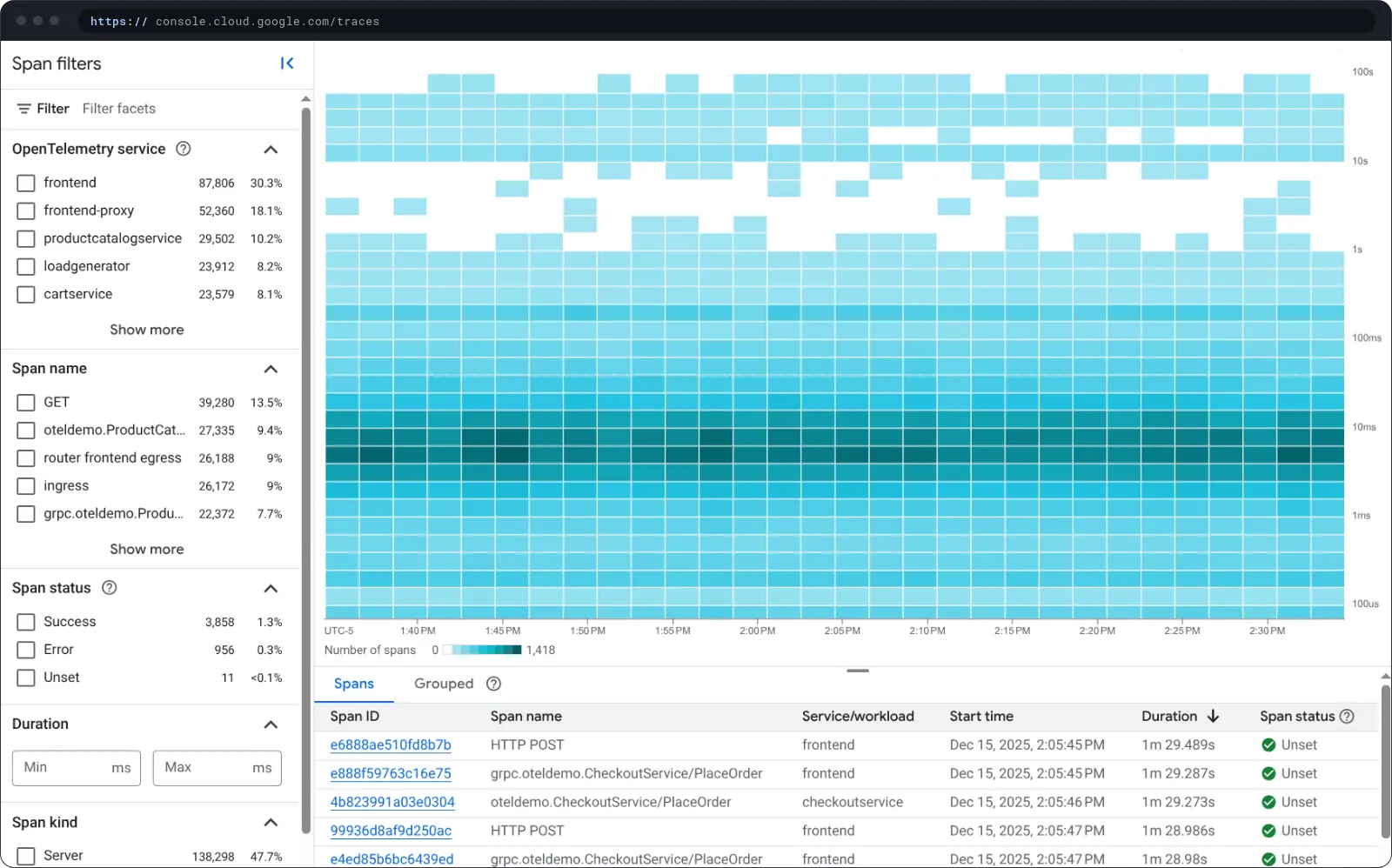
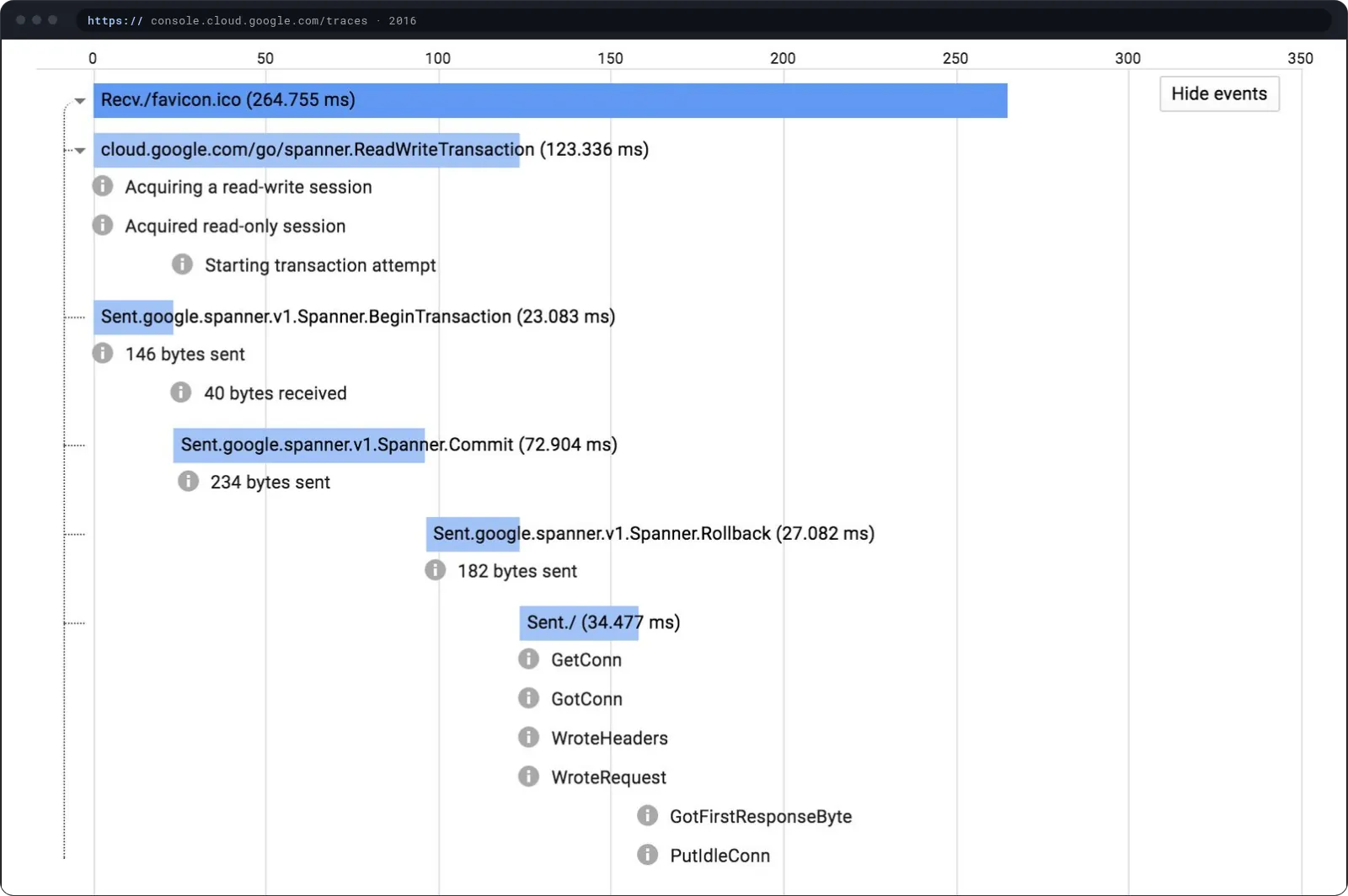
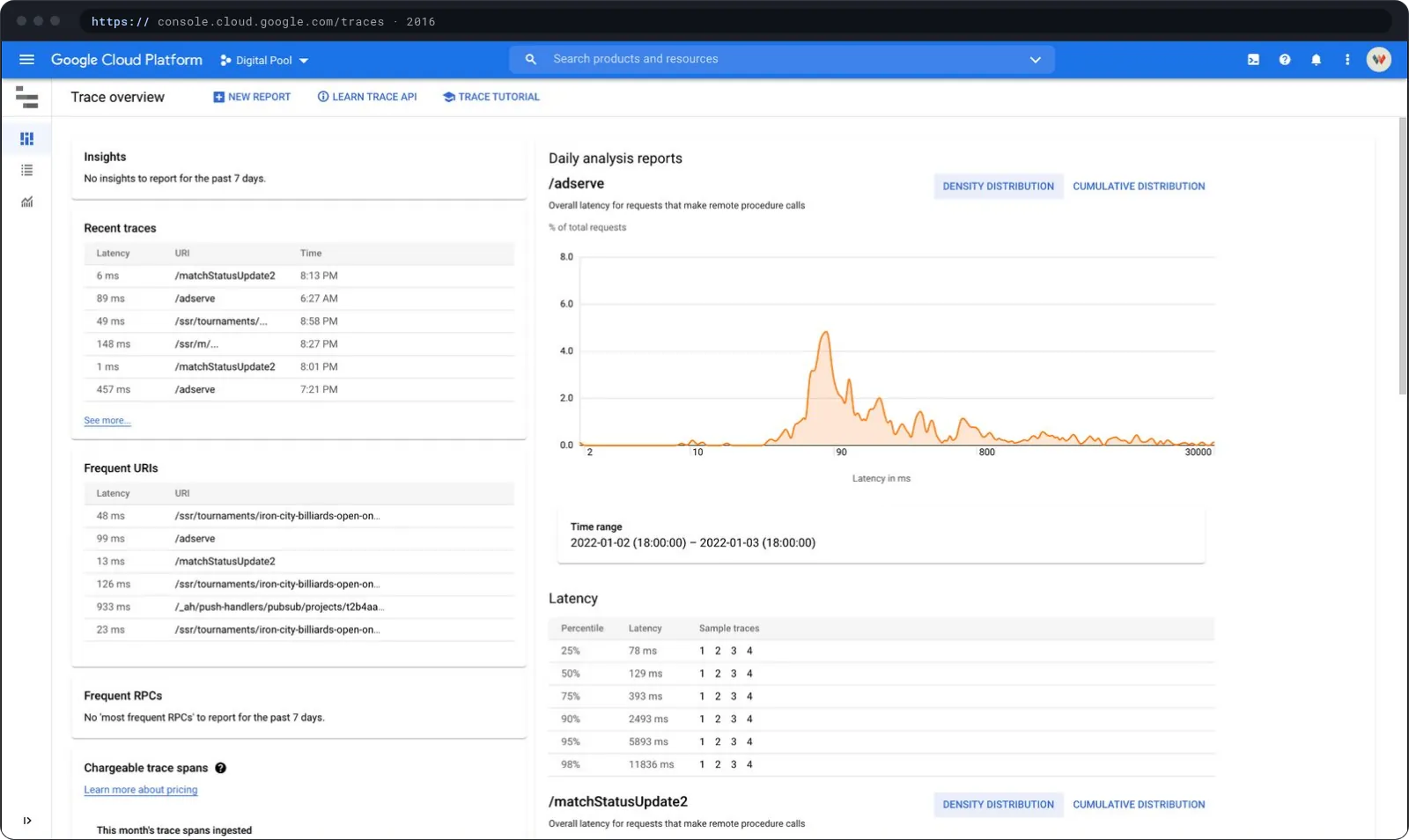
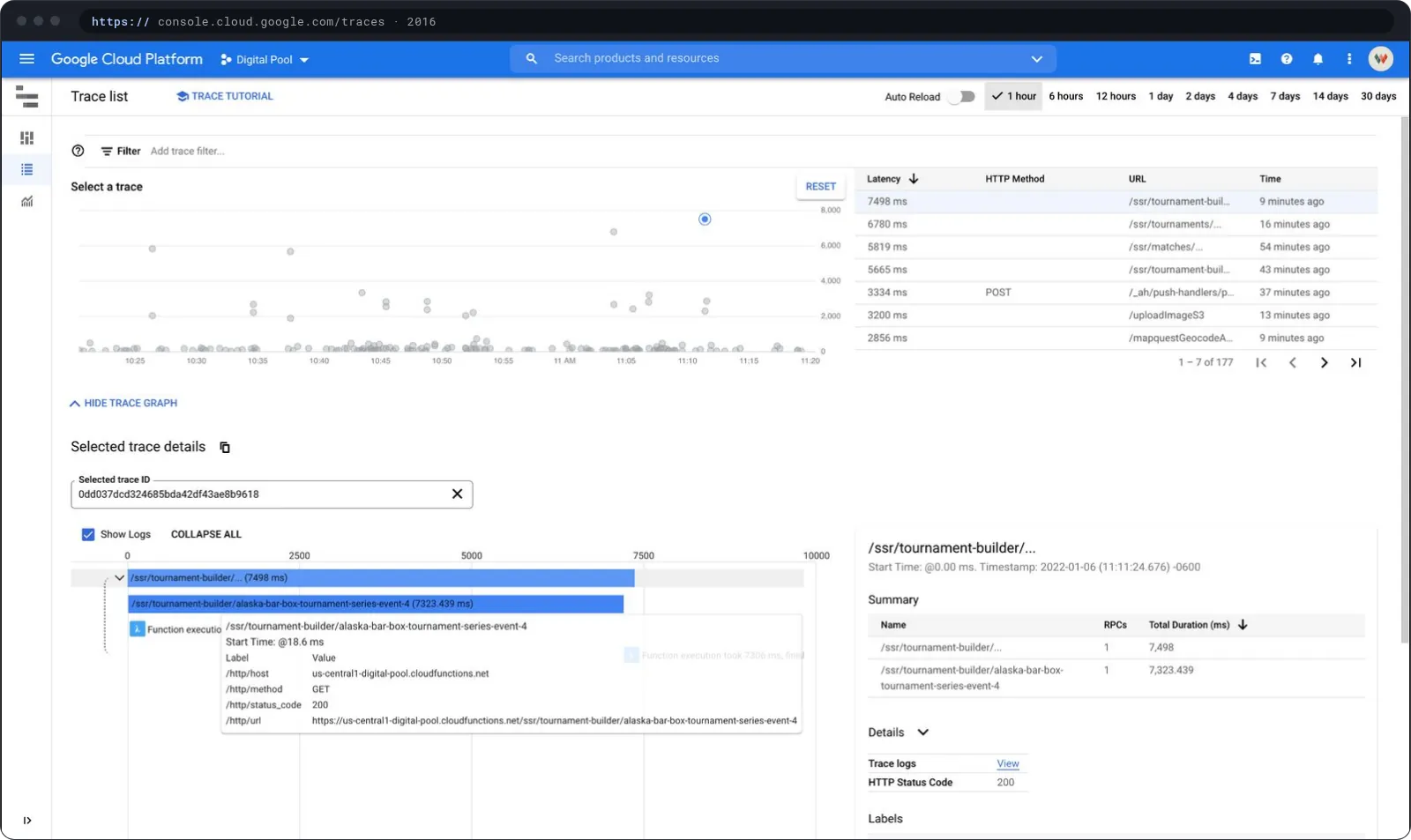
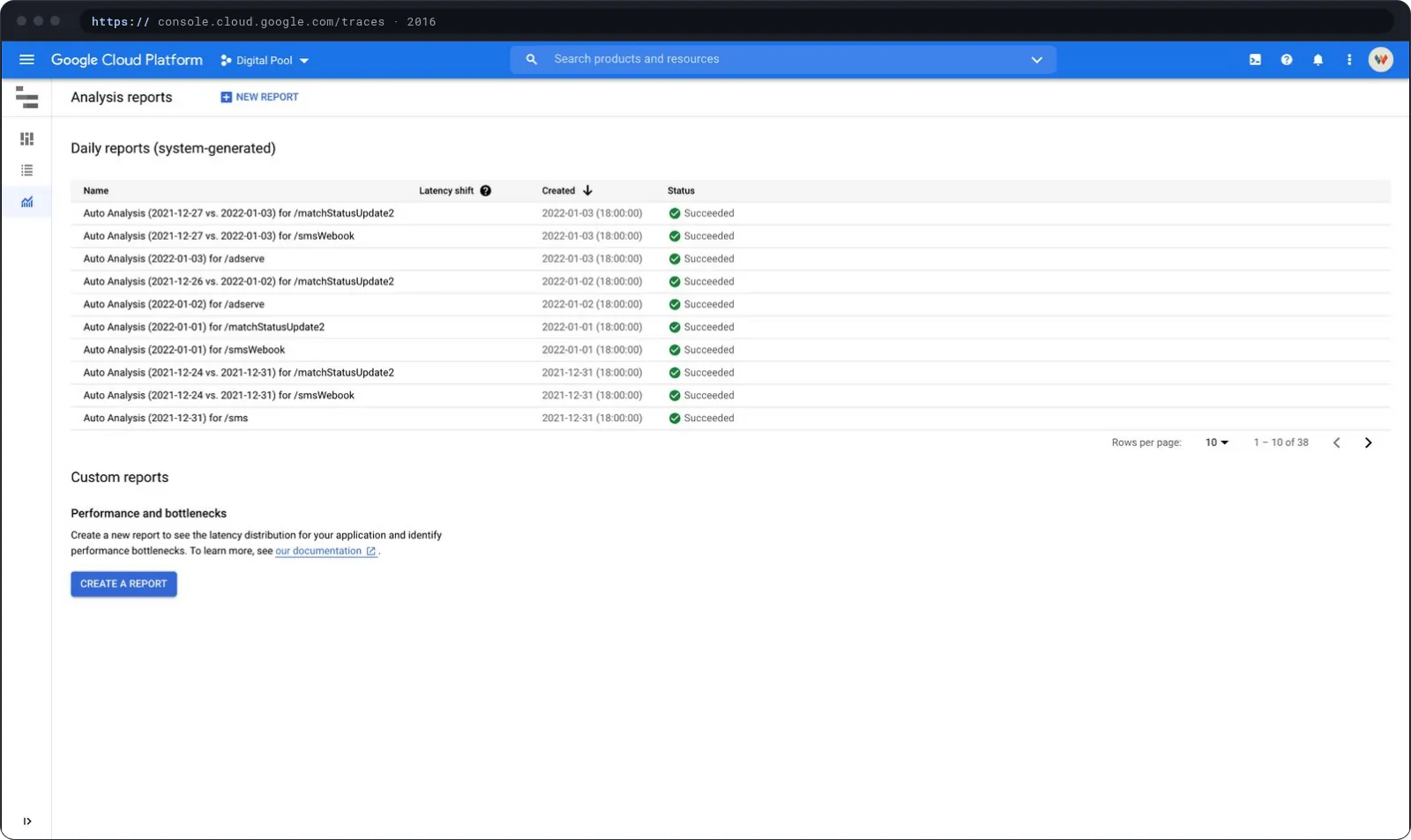
Distributed tracing, designed from zero alongside Cloud Profiler: the trace list, the waterfall and the daily analysis reports, with the heatmap as the explorer today.

Error Reporting and Cloud Debugger
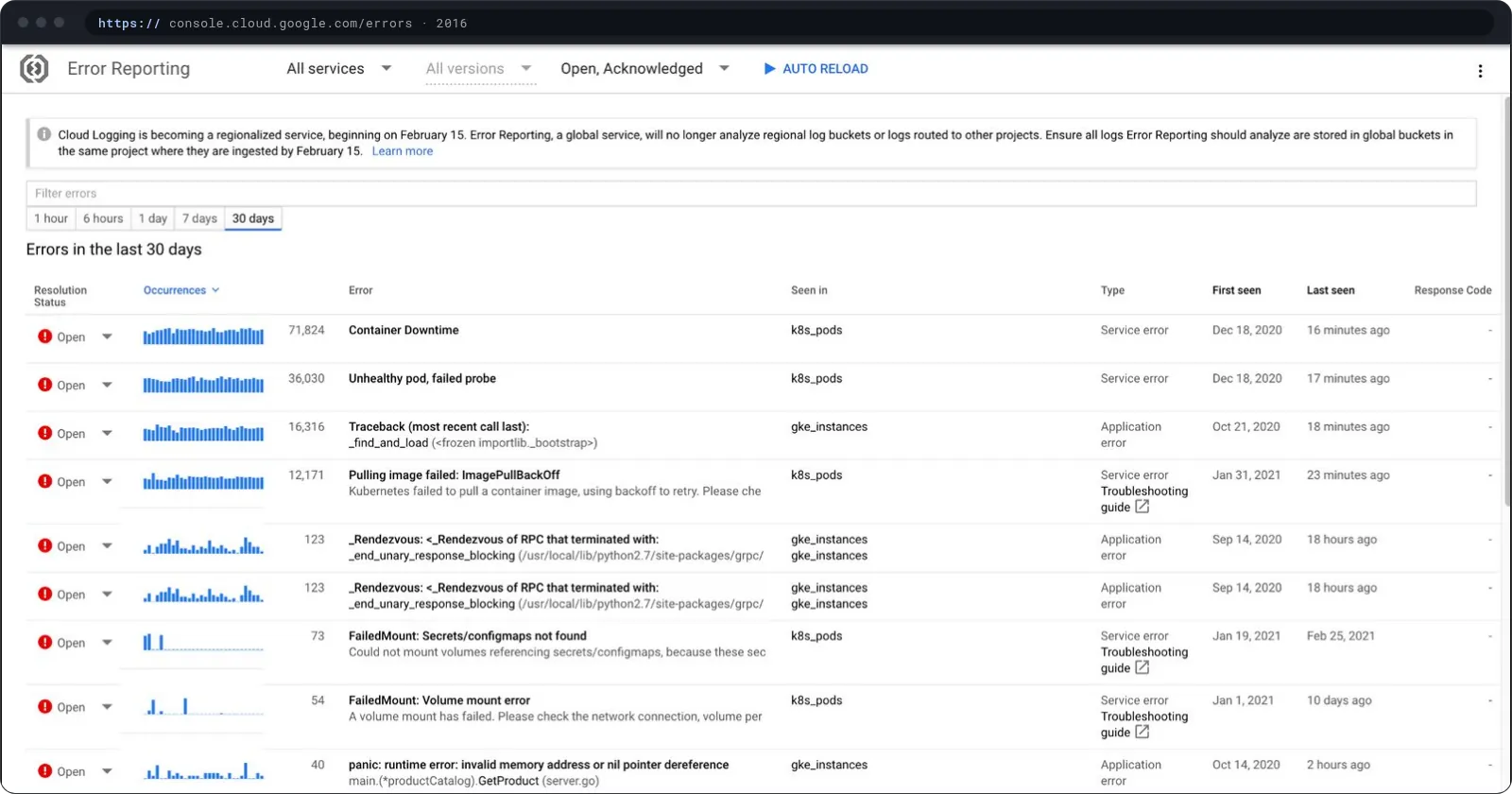
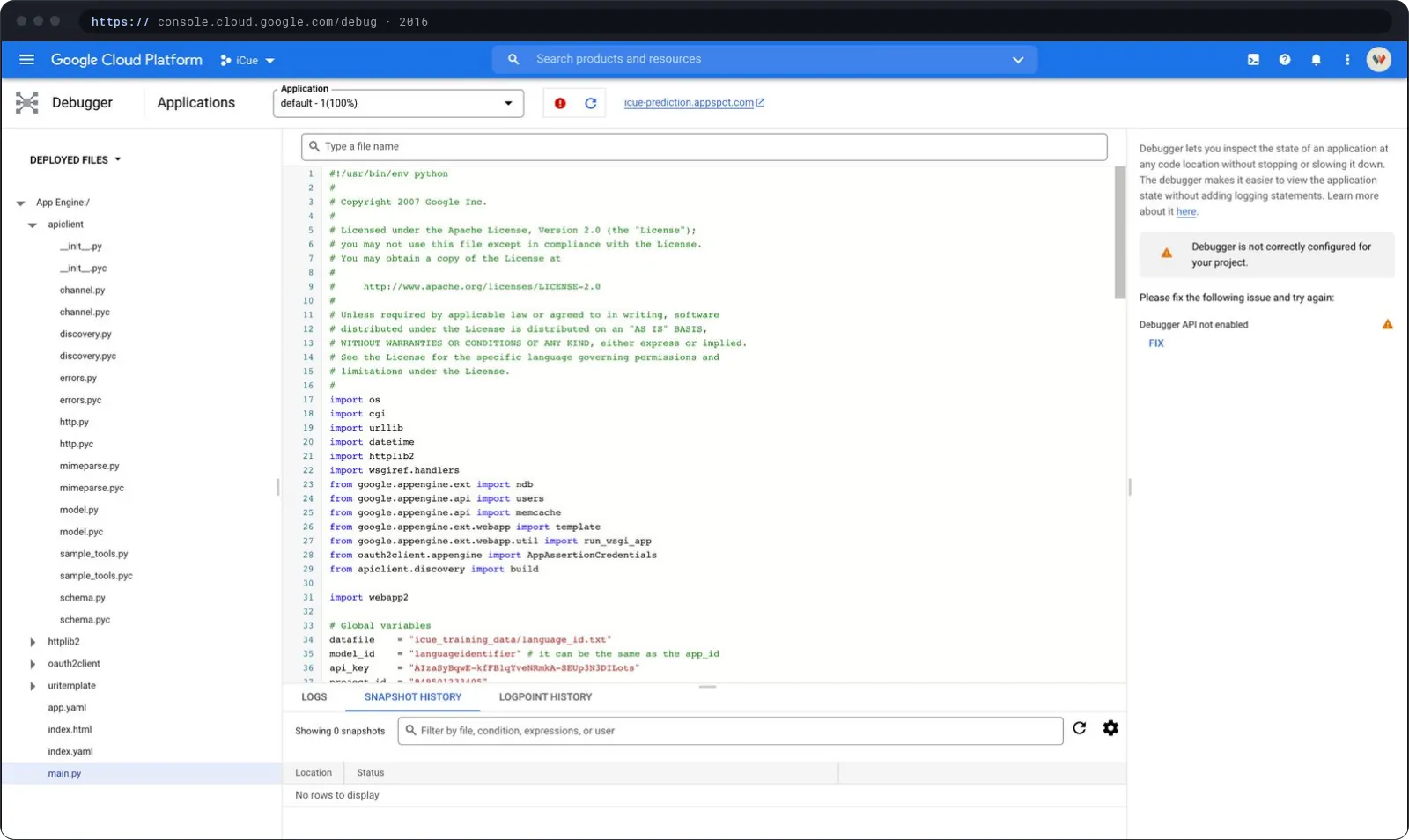
Error Reporting grouped, counted and trended errors so the one that mattered surfaced first; the Debugger, which I designed from zero, took snapshots in production without stopping anything.

Security Command Center
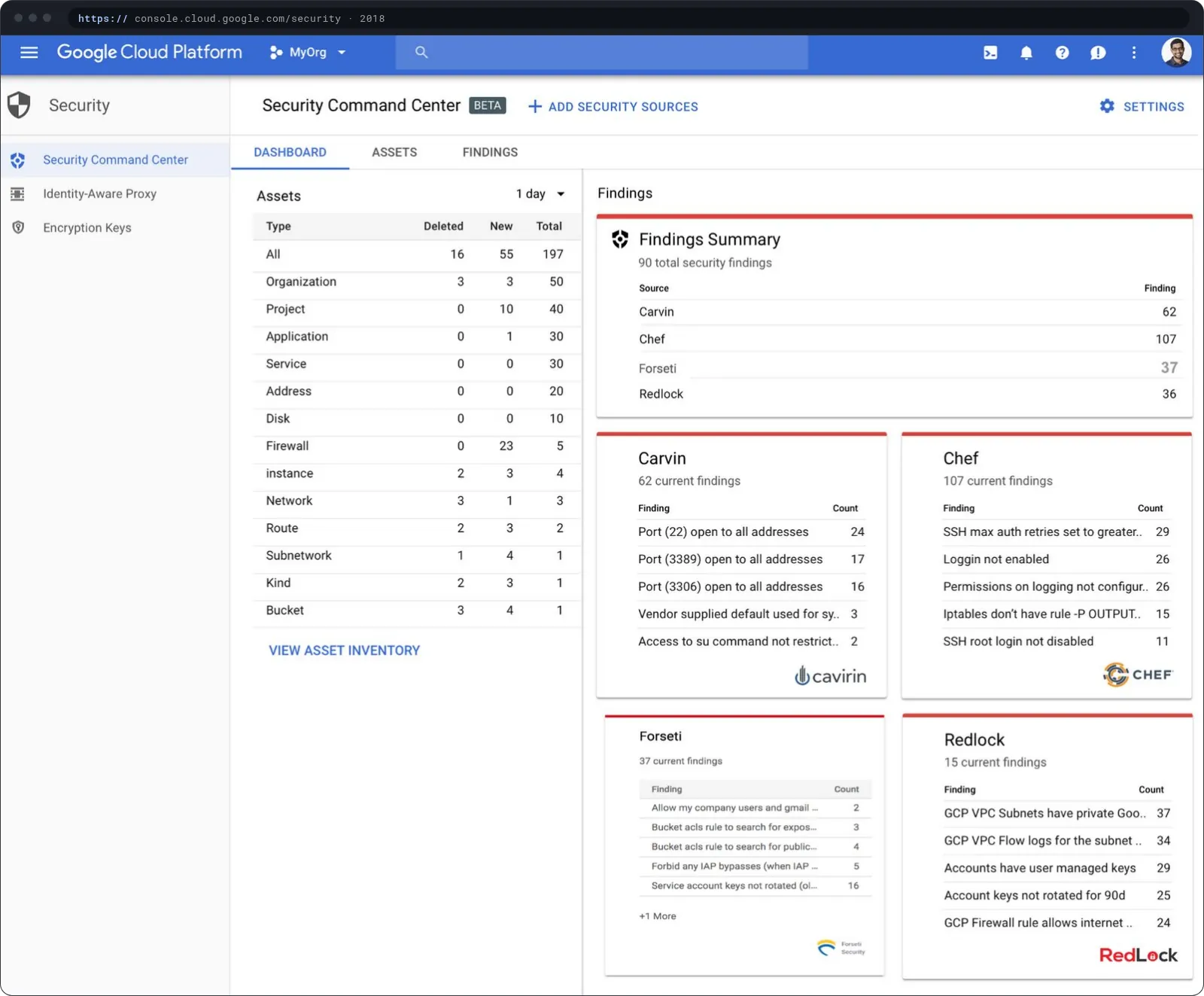
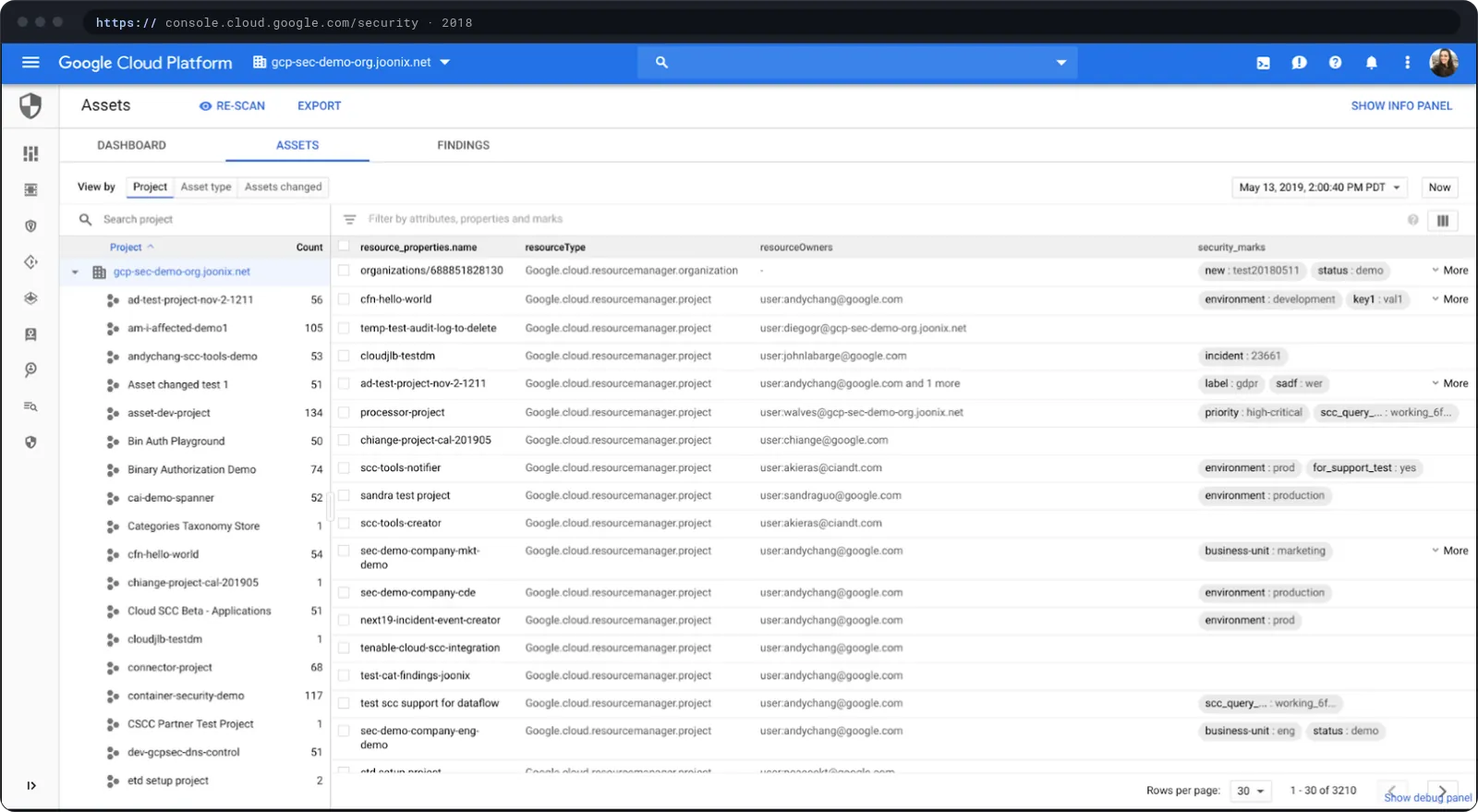
The security posture of a whole organization on one page, designed from zero while the product was still finding its shape. That v1 has since grown into a large suite of security products.

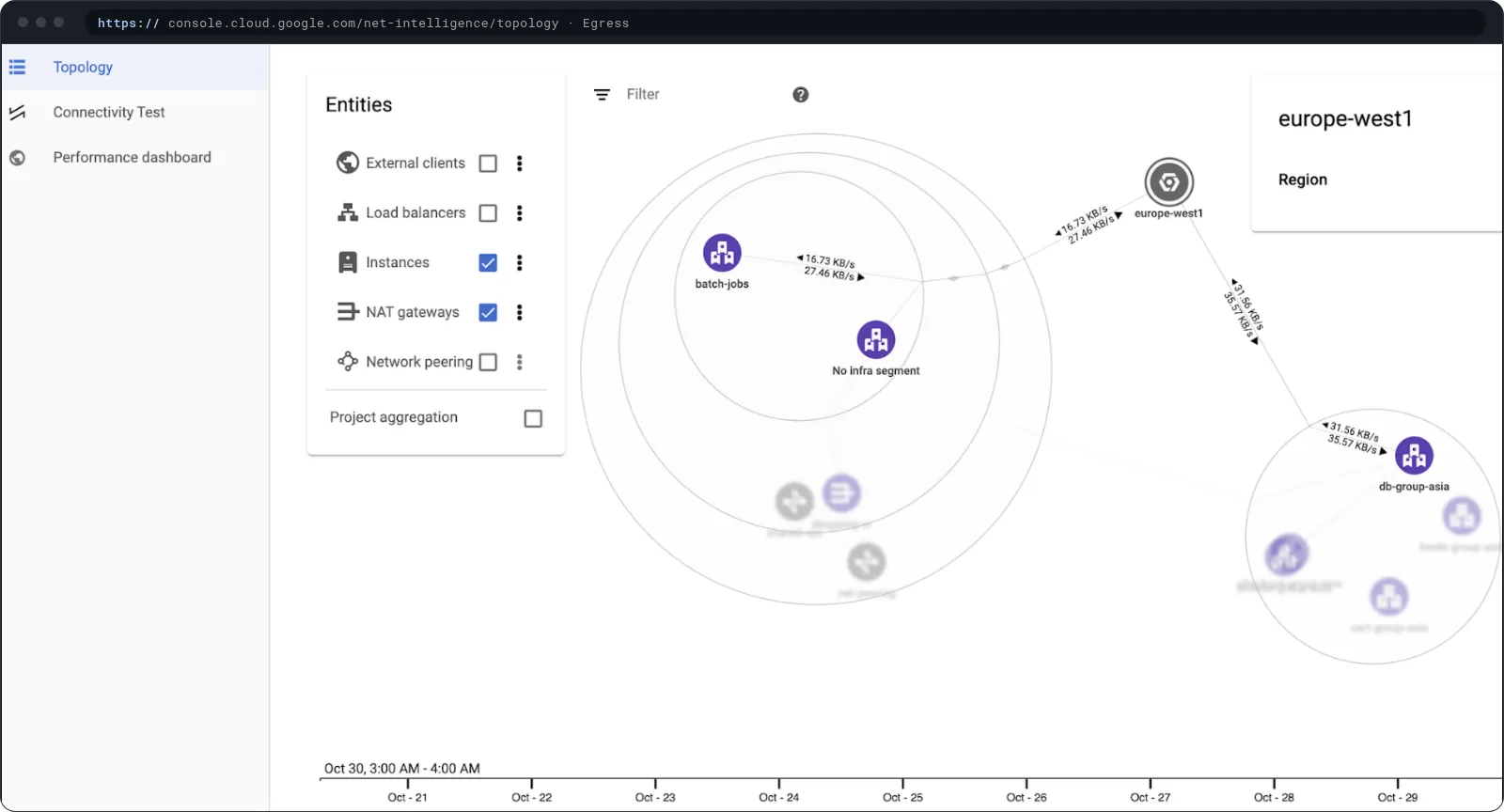
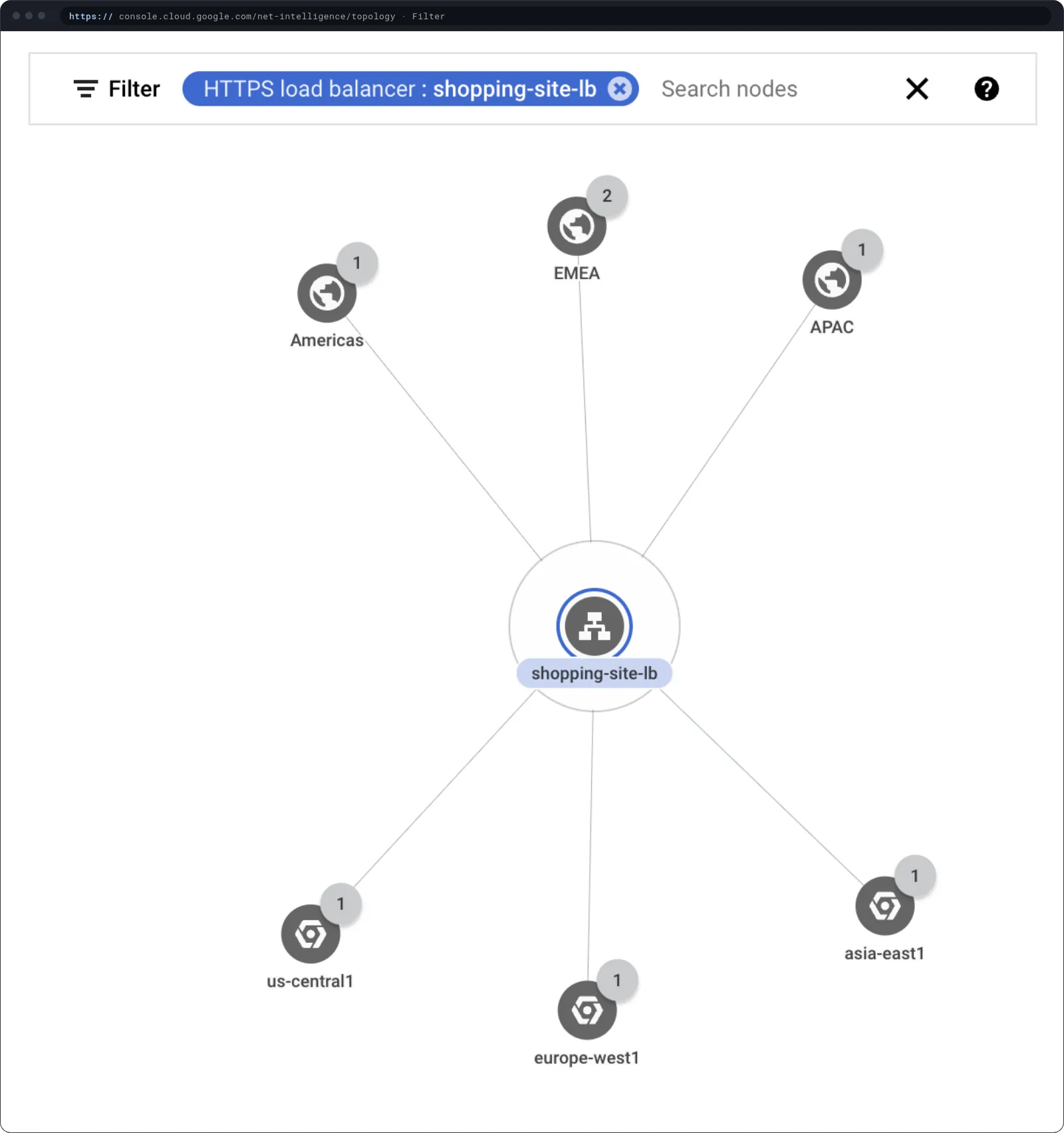
Network Topology
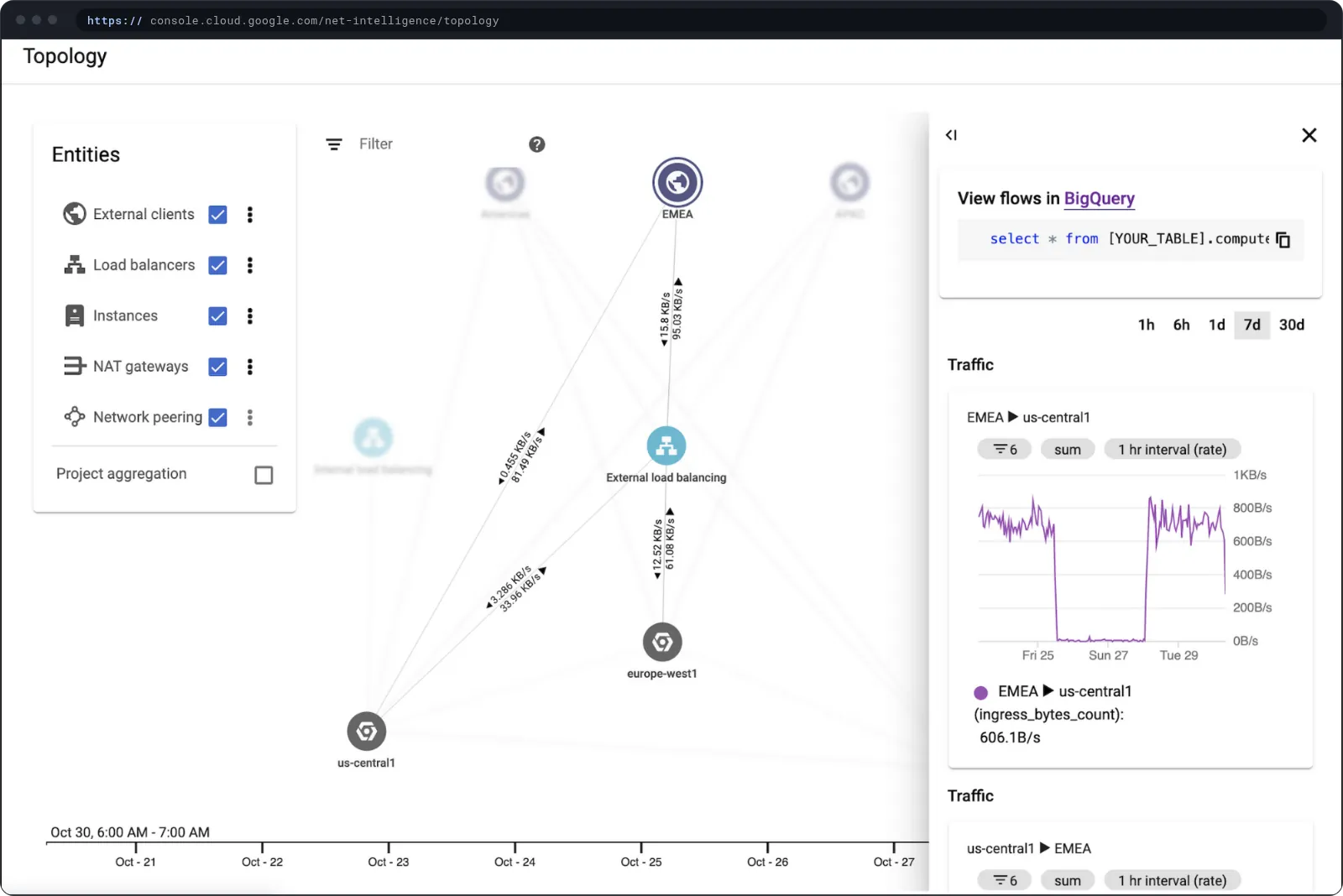
A live graph of the network and the traffic moving through it, with insights on the edges and a detail panel that turns a node into something you can act on. The same design later carried into Anthos Service Mesh.

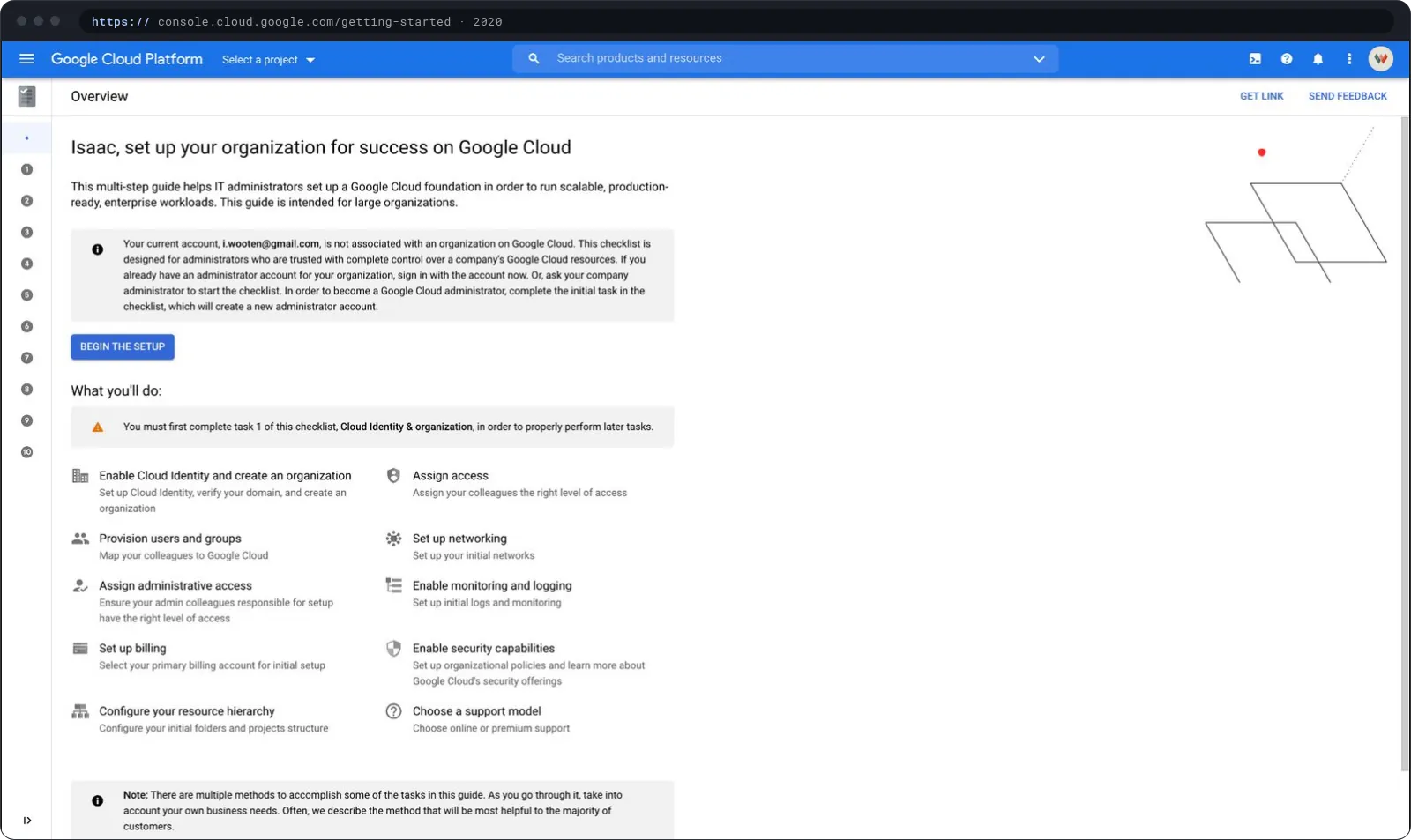
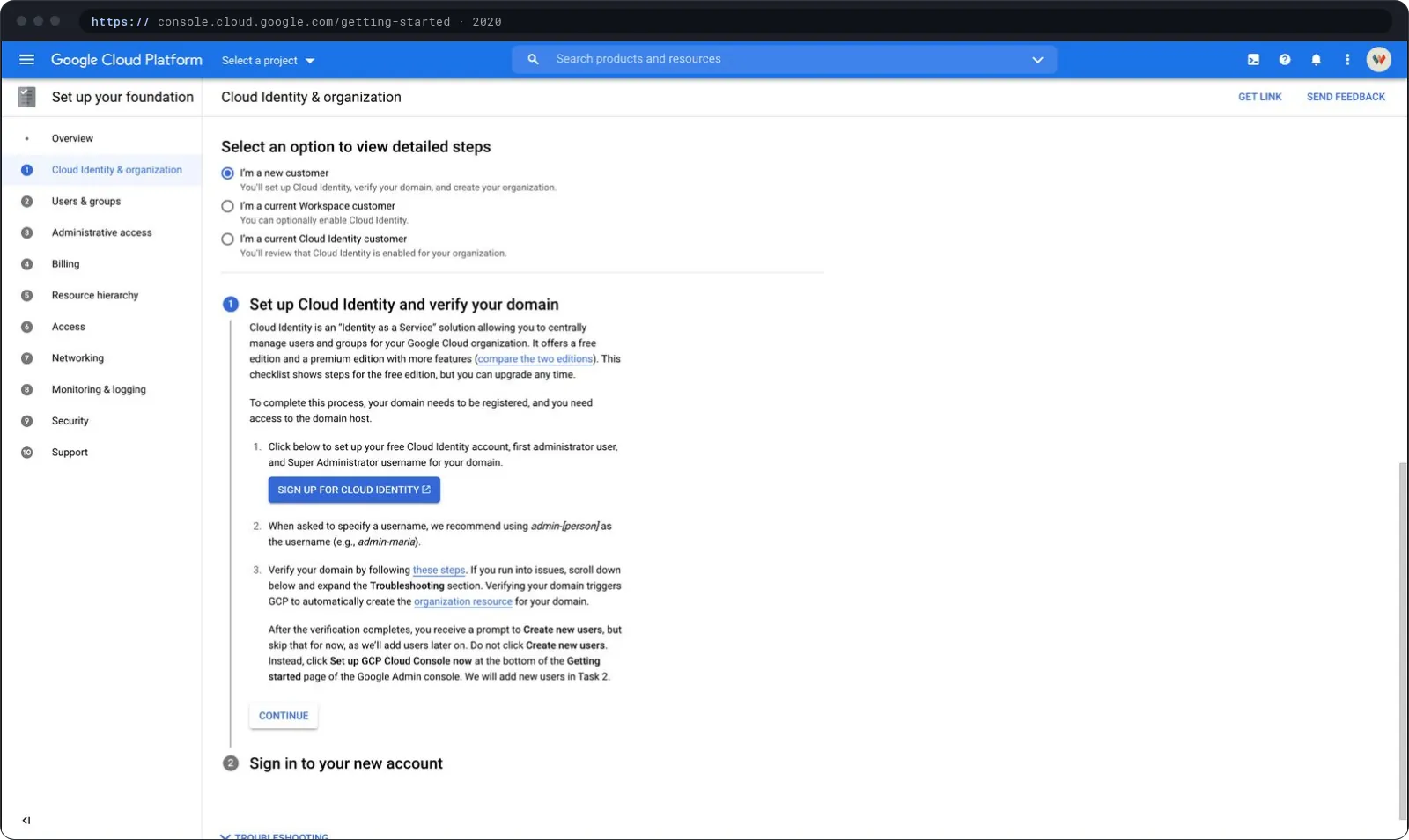
Onboarding and the setup checklist
Growth UX for the console: an organization's first hour, written as a checklist a new administrator could actually finish. A later six-month collaboration on this journey, across BigQuery, the streaming products and Cloud Setup, unlocked new roadmap areas and additional funding for a partner team.
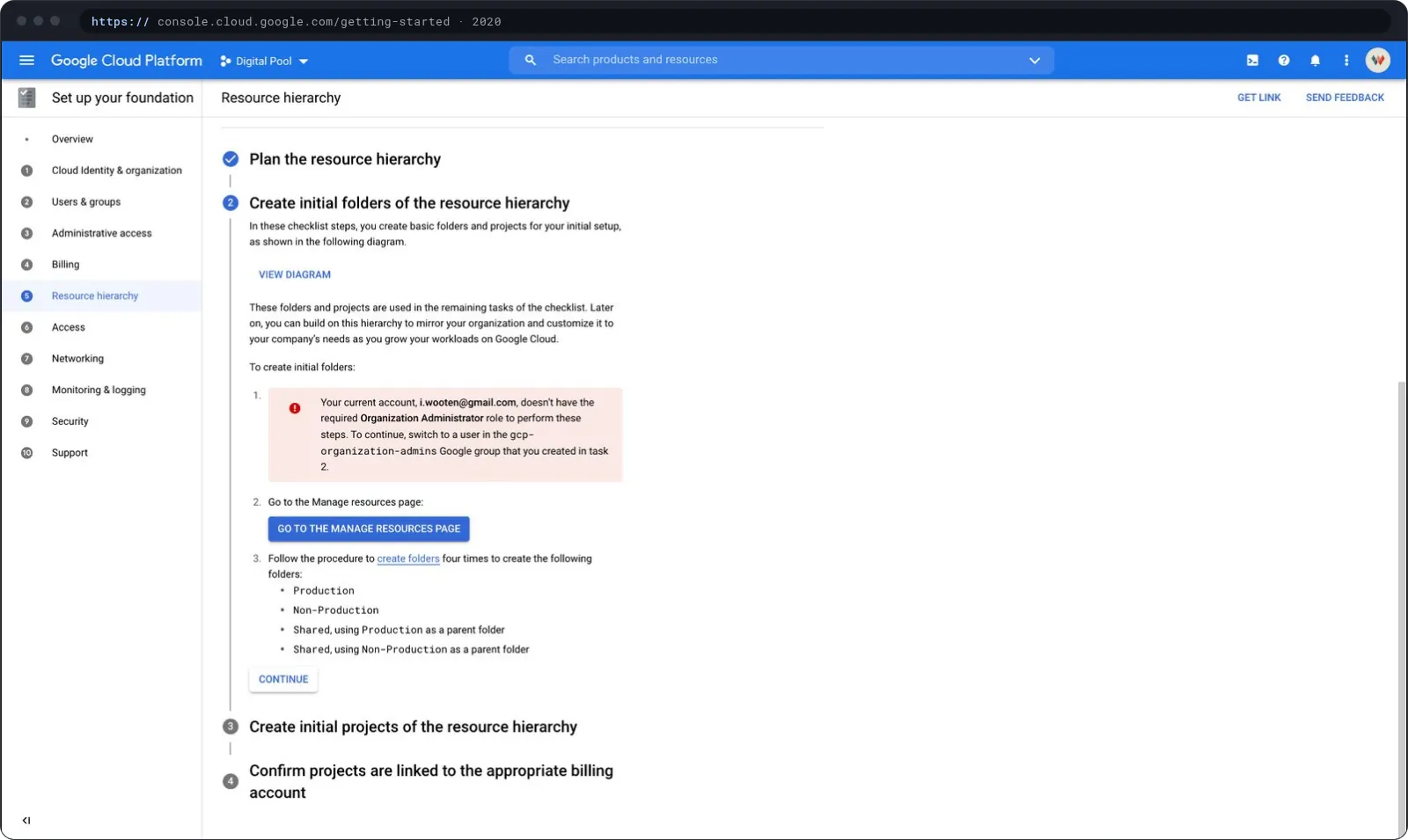
Product icons are Google Cloud's official icons. Screenshots are Google Cloud's, from its public documentation and from the product as it shipped at the time, framed here to show work I led. For the unreleased work I can talk through process, decisions and tradeoffs in a conversation, within what I am allowed to say. Book thirty minutes ↗.
Role
I have been at Google for twelve years, across three offices and seven teams, and went from individual contributor to design manager along the way. Today I lead the developer-experience design team in Data Cloud: BigQuery, Gemini Enterprise, BigQuery Studio, Databases Studio, the Data Agent Kit for VS Code and Data Apps for Notebooks.
My depth is data and big-data tooling, and at the center of it sits BigQuery, a Gartner Magic Quadrant leader and a top-3 revenue product in Google Cloud. Data is the substrate of modern AI, and the analysts and engineers who work with it are exactly who the agentic era has to serve well.
Still technical
I still read the code and the Figma before I weigh in. It makes my calls faster and more specific, and engineers can tell the difference.
Growing designers
I grew the team from five to eleven, and hiring was the easy half. The harder half is the mentoring and calibration that mean people leave more senior than they arrived.
Direction over decisions
I give the team sharp intent and a high bar rather than my sign-off on every screen. A clear direction scales to eleven designers; a queue outside my door does not.
Influence at scale
Design lead in an org of several thousand people, where nobody is obliged to take your advice. Landing work at that scale means building the case until the right thing is also the obvious thing.
Most of what ships is designed by the team, not by me: the surfaces have owners, and those owners make the calls. I keep the first pass at whatever does not exist yet. The team is six senior-and-above designers today, most with more than five years at Google, and in a discipline where two years is a normal tenure that retention is the number I am proudest of. Their names are theirs to publish; ask me and I will tell you who did what.
AI-native, every surface
Agentic tools have to follow the developer wherever the work happens, so we design for every surface they use.
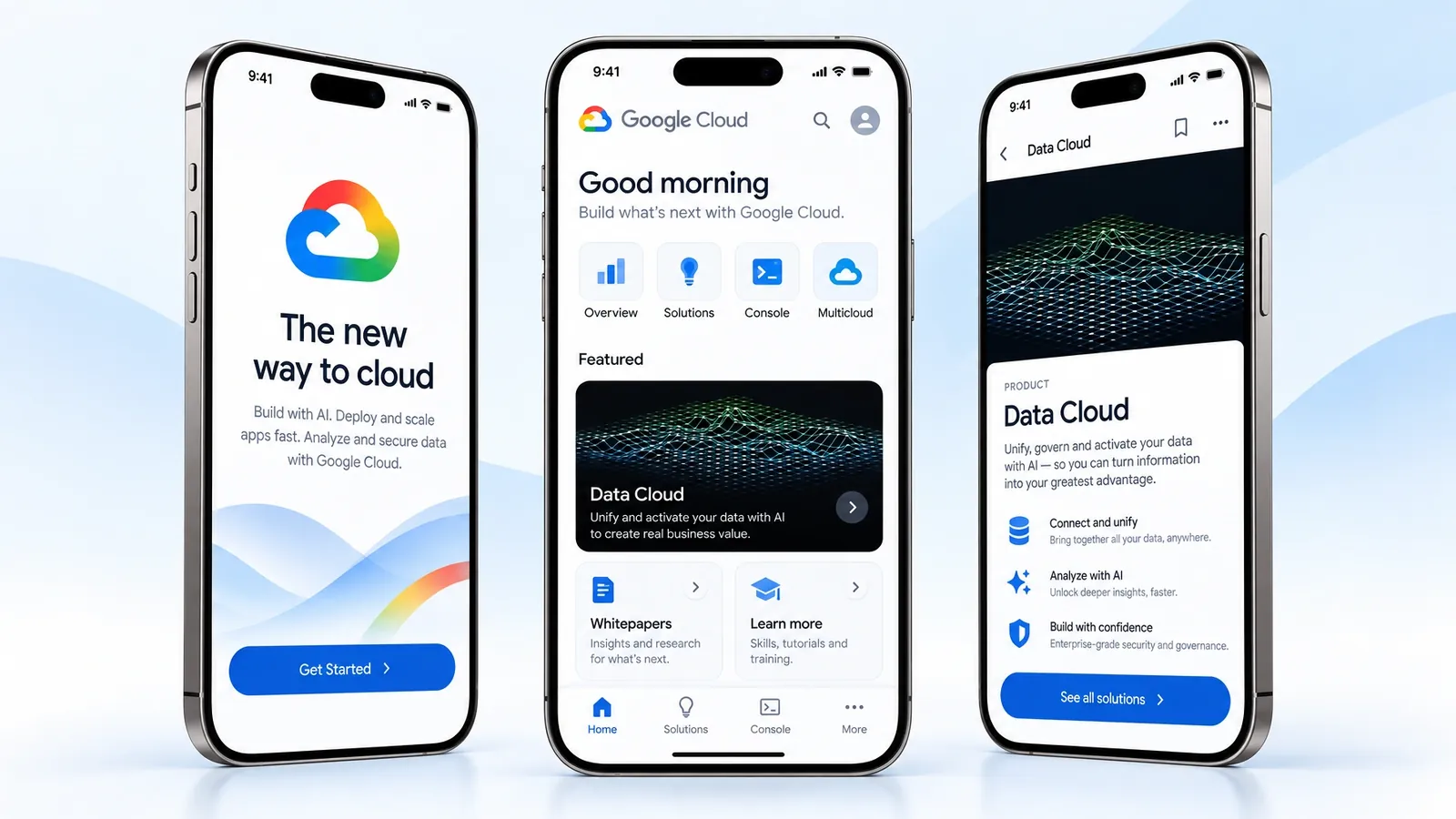
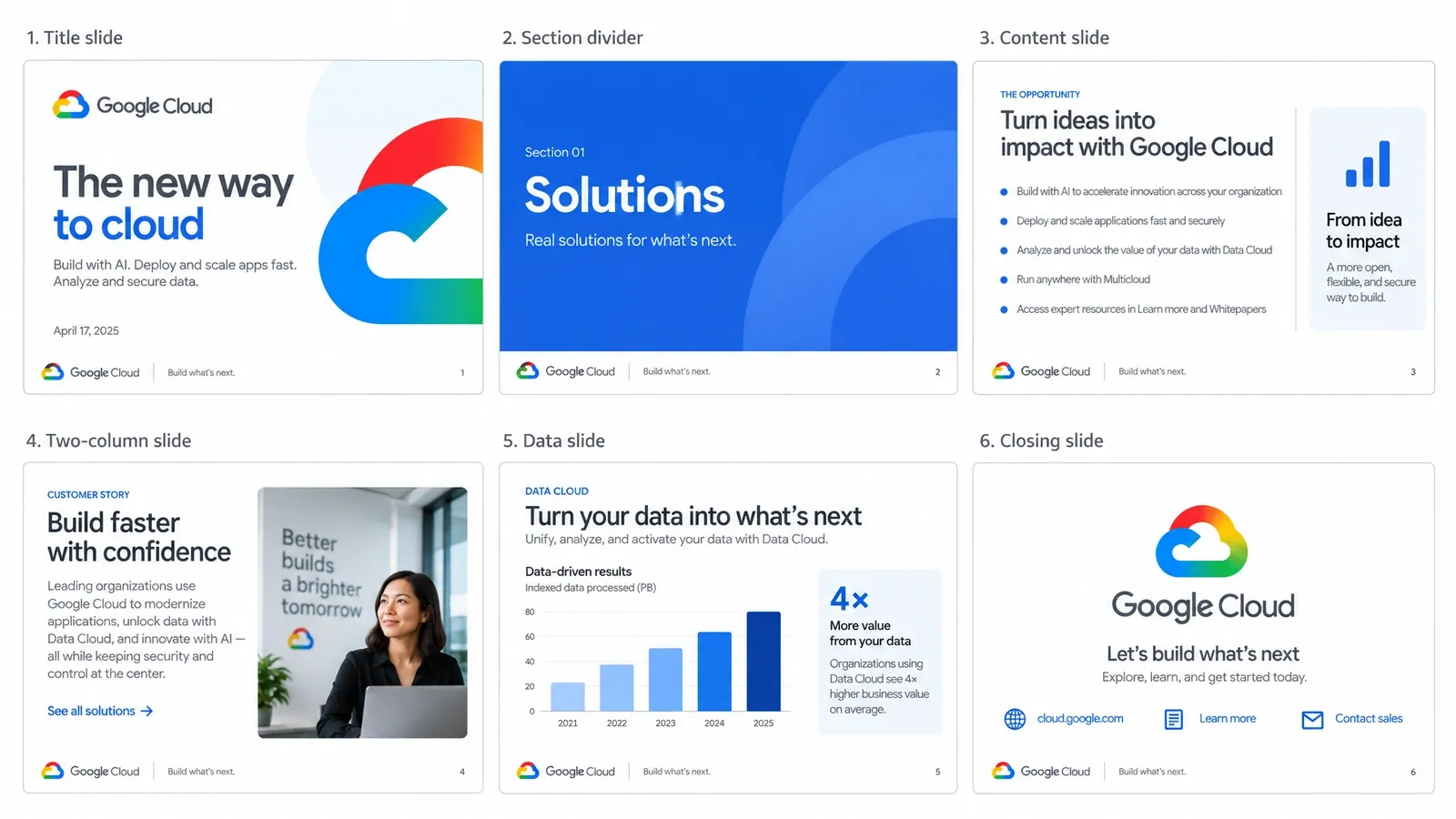
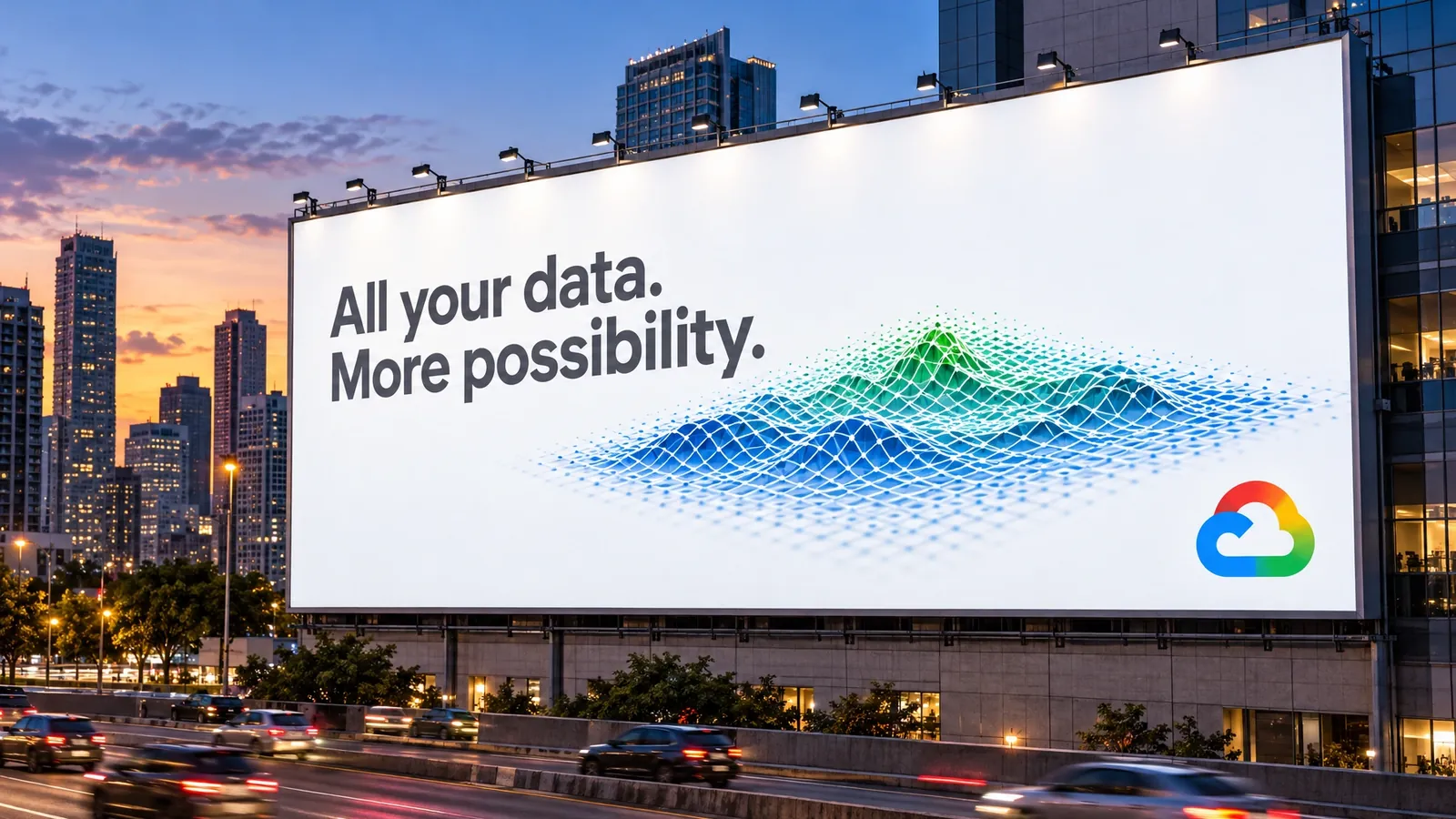
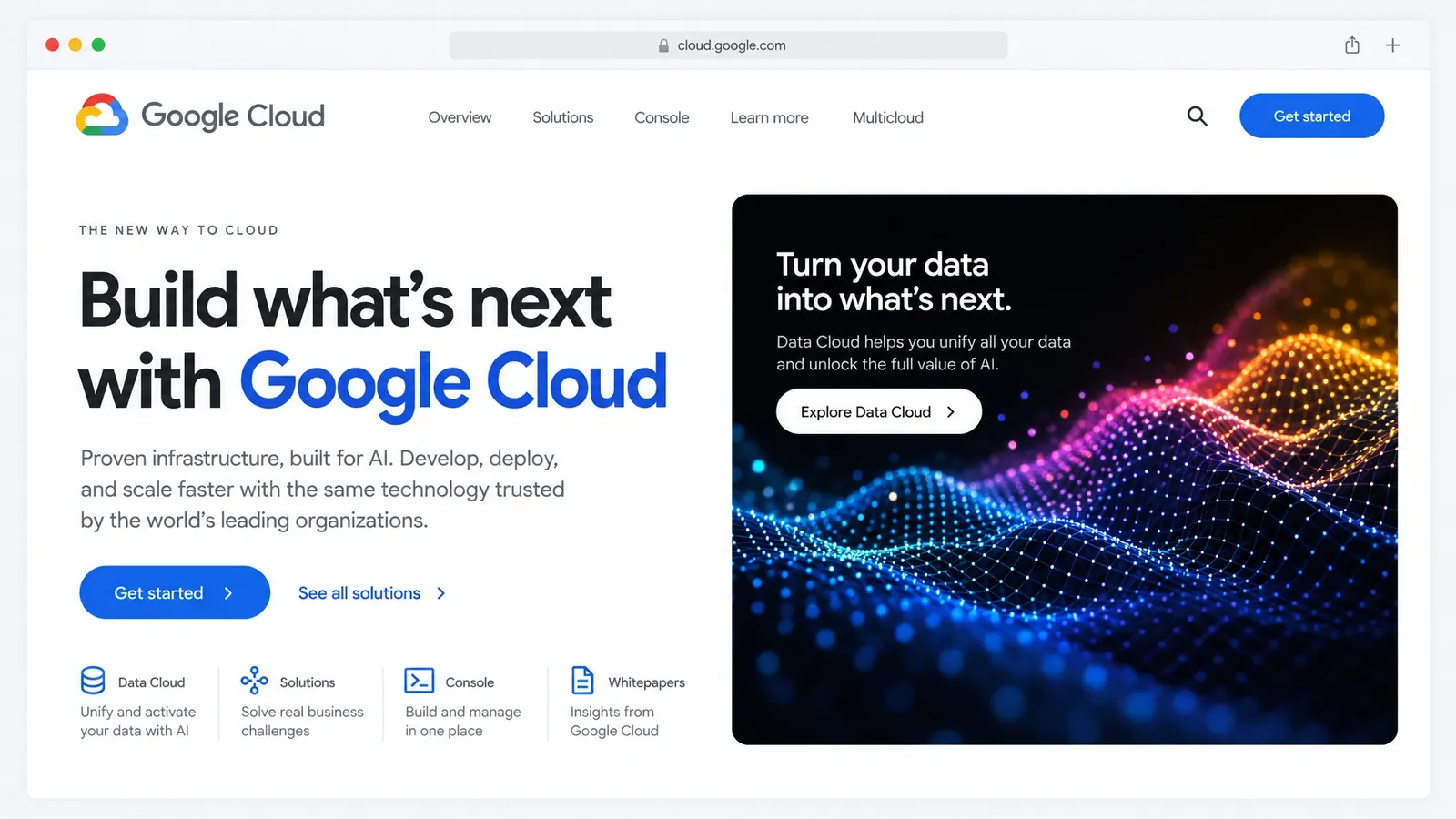
Brand world
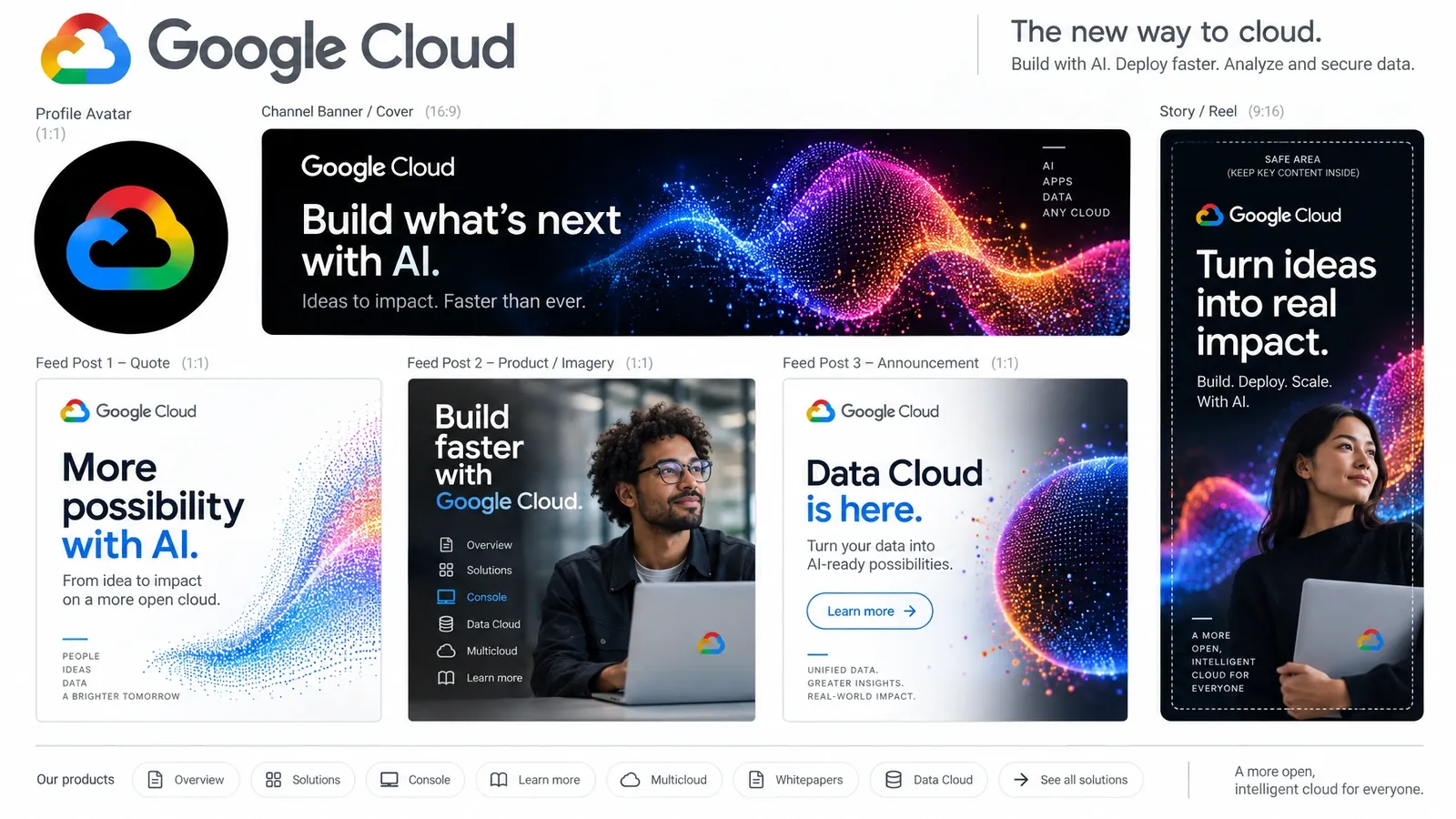
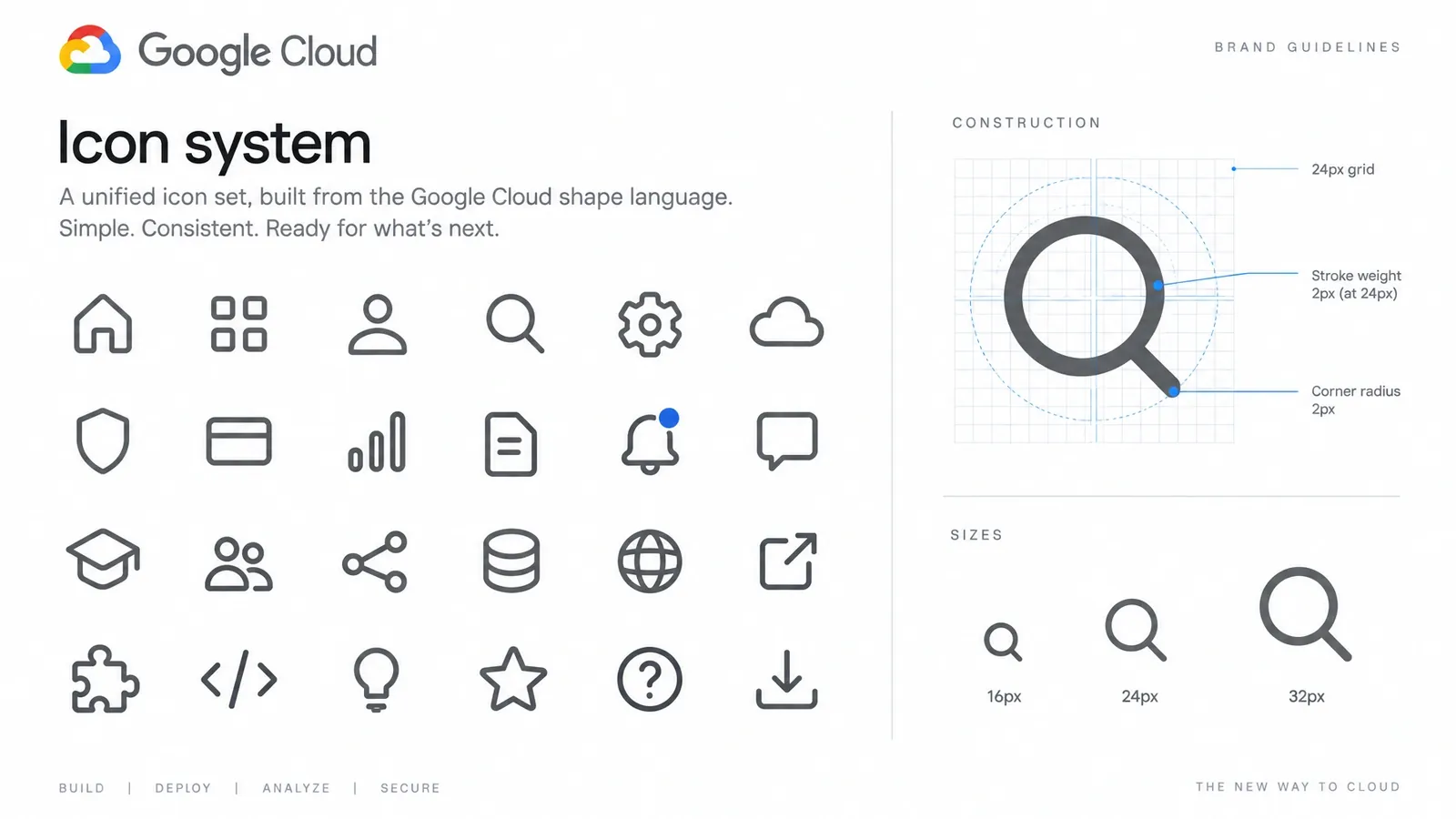
Google Cloud's brand DNA, locked and rendered across surfaces: product UI, out of home, data visualisation and the data story itself. Studies I made with my own tool, not Google's work, and the marks are Google's.
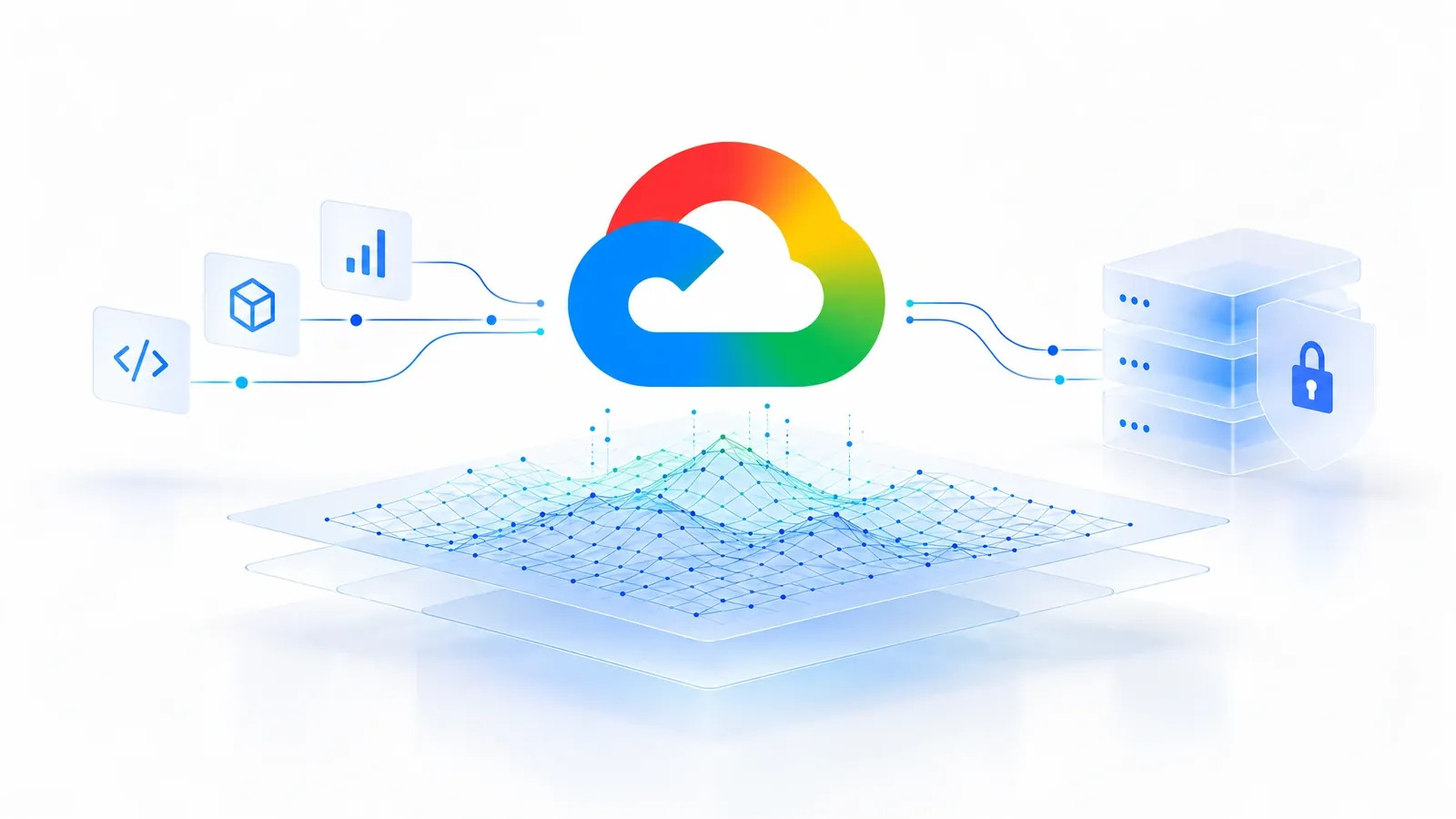 Brand world · rendered from Google Cloud's brand DNA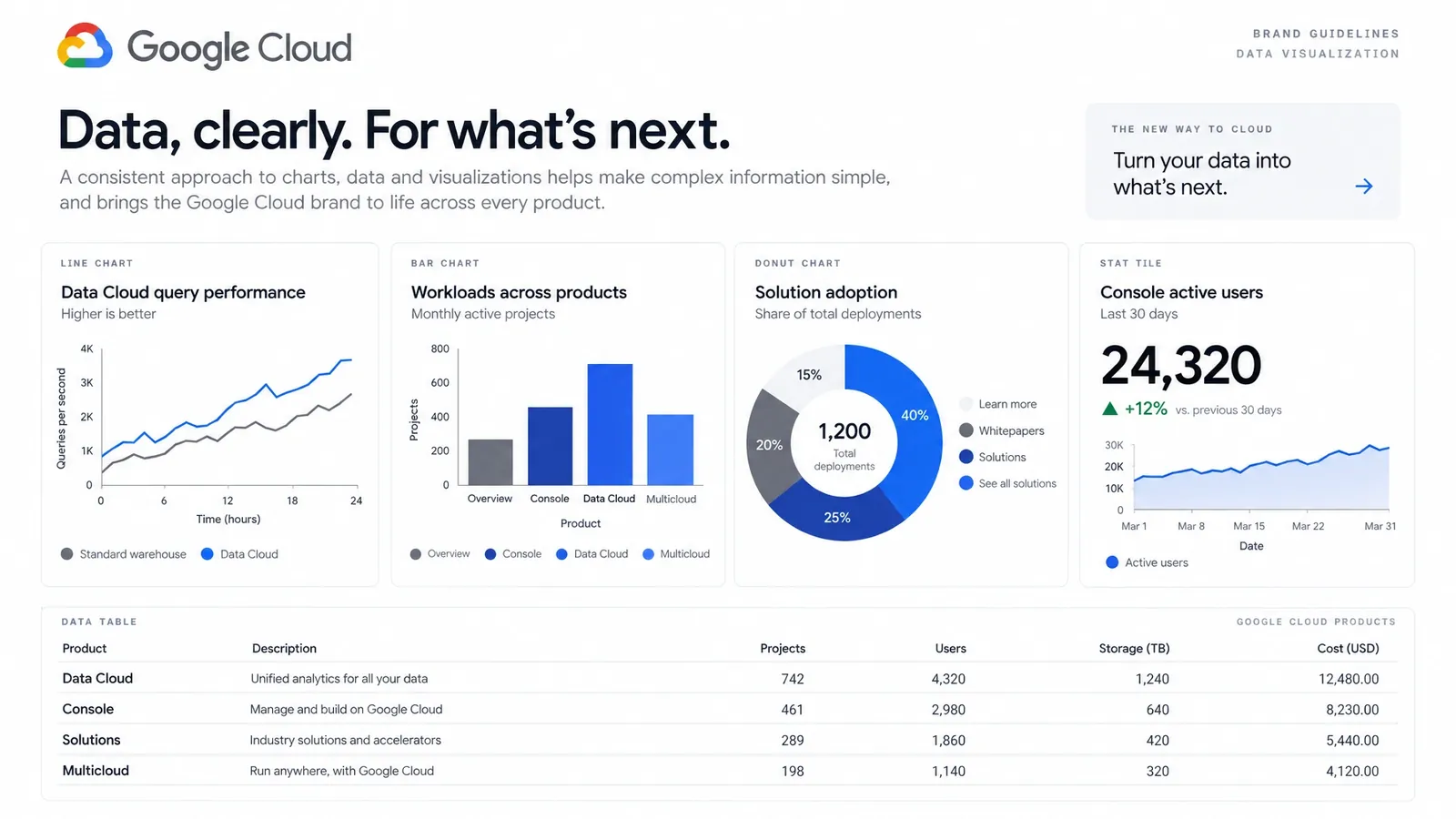
Career arc
Pixels first, then patterns, then people. Twelve years, from IC to manager:
- Sr. Staff UX Design ManagerData Cloud UX from Jul 2026 · team of 11, 6 todayNov 2024–Present
- UX Team Lead / ManagerBigQuery UX & BigQuery Experience, lead · team grown to 11Mar 2024–Nov 2024
- Staff UX Design LeadData Analytics UX, leadOct 2023–Mar 2024
- Staff UX DesignerData Analytics · Streams & LakesFeb 2022–Oct 2023
- Staff Interaction Designer / UX EngineerGoogle CloudJul 2018–Jun 2021
- Staff UX ArchitectGoogle Cloud PlatformJan 2016–Jul 2018
- Senior Interaction DesignerStackdriver · Cloud DiagnosticsMar 2014–2016
The team ran at eleven from 2024 until November 2025 and is six senior-and-above designers today, after company-wide layoffs. The months between 2021 and 2022 are LunarCrush, where I went full-time as Chief Design Officer before returning to Google in February 2022 on the streaming products. Lead of the Data Analytics UX team from October 2023, of BigQuery UX from March 2024, and of Data Cloud UX from July 2026.
Scope
Products I led or oversaw design for, with research, engineering and product.
Data & analytics
- BigQuery
- Gemini Enterprise
- BigQuery Studio
- Agentic BigQuery
- Databases Studio
- Data Agent Kit (VS Code)
- Data Apps for Notebooks
- Dataflow
- Dataproc
- Dataform
- Dataplex
- Composer
- Pub/Sub
- Kafka
- Flink
- Spark
Observability, security & platform
- Cloud Trace
- Cloud Profiler
- Cloud Debug
- Cloud Logging
- Error Reporting
- Cloud Security Command Center
- Network Topology → Anthos Service Mesh
- Terraform Blueprints & onboarding
- Critical User Journeys (GCP)
- Perceived-performance patterns
- 3rd-party auth & data regionalization
Capabilities
- Design leadership & management
- UX architecture
- Developer experience (DX)
- Data & AI product design
- Design patterns & systems
- Cross-org strategy
- Cloud & enterprise UX
- Mentorship
What I’d tell you over coffee
A team in trouble rarely needs better taste.
It needs a direction it believes in and an audience that can see it. Get everyone to agree on the problem first, because that is the expensive part; after that, most of design is cheap. Then put the work in front of the people who decide the roadmap, every week. The process comes last. Direction, visibility, process, in that order.
Next
The full role history lives on LinkedIn.
Connect on LinkedIn ↗